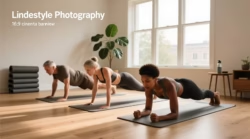
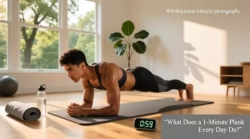
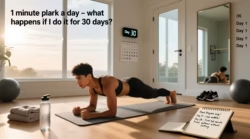
Performing a 1-minute plank every day is a simple yet effective way to build core strength, improve posture, and enhance overall stability without equipment or gym access 1. This isometric exercise engages your abs, back, shoulders, glutes, and legs simultaneously, making it a time-efficient addition to any fitness routine 2. When done with proper form—maintaining a straight line from head to heels and bracing the core—you can expect gradual improvements in functional movement, balance, and endurance within weeks 3. Avoid arching your back or hiking your hips; these common mistakes reduce effectiveness and increase strain. Ideal for beginners and experienced exercisers alike, the daily plank supports long-term habit formation and mental resilience.
About the 1-Minute Daily Plank
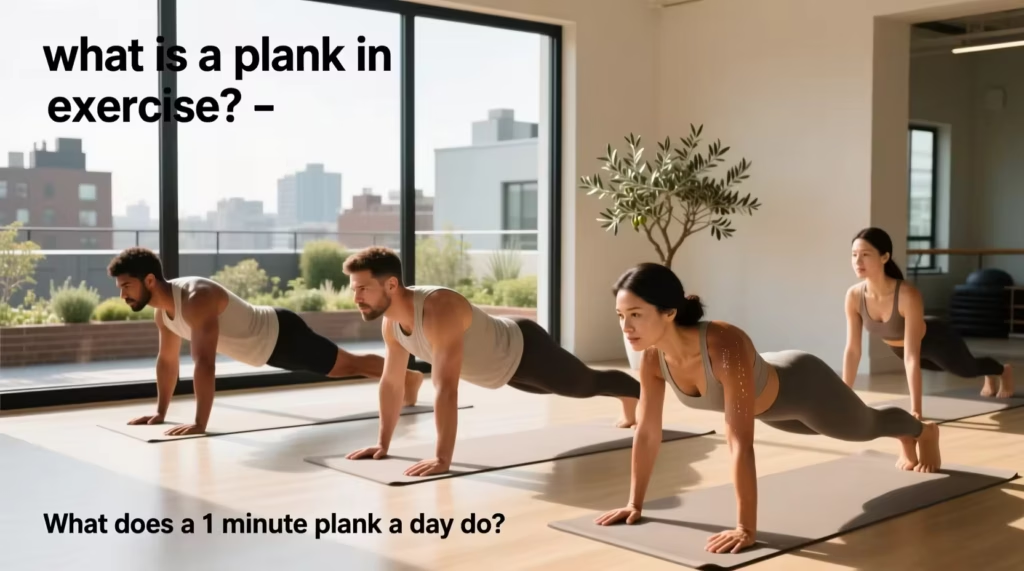
The plank is an isometric core-strengthening exercise where you hold a push-up-like position, supporting your body weight on your forearms and toes. Unlike dynamic movements, it emphasizes sustained muscle engagement rather than motion. The standard forearm plank targets the entire core while also activating upper body and lower body stabilizing muscles 2.
A 1-minute plank a day has become a popular fitness challenge due to its simplicity and minimal time requirement. It fits easily into morning routines, workout warm-ups, or as a standalone activity. Whether practiced in yoga, Pilates, or general strength training, the plank serves as a foundational movement that enhances neuromuscular control and trunk stability 4.
✅ Key takeaway: The 1-minute daily plank isn’t about intensity—it’s about consistency, alignment, and progressive improvement in muscular endurance.
Why the 1-Minute Plank Is Gaining Popularity
In today’s fast-paced lifestyle, many people seek efficient, no-equipment workouts that deliver tangible results. The one-minute plank challenge meets this demand by offering a low-barrier entry point to fitness. Social media trends, wellness influencers, and real-world testimonials have amplified its visibility, with individuals sharing improved posture, reduced discomfort during daily tasks, and greater body awareness after consistent practice 5.
Its appeal lies in accessibility: it requires no special gear, takes less than two minutes including setup, and can be performed almost anywhere. For those new to exercise or returning after inactivity, the plank provides measurable progress—going from holding 20 seconds to a full minute feels like a real achievement. Additionally, the mental aspect of enduring discomfort builds discipline, which often translates into other healthy habits 6.
Approaches and Differences
While the traditional forearm plank is most common, several variations exist, each offering different challenges and muscle emphasis.
| Plank Type | Benefits | Potential Challenges |
|---|---|---|
| Forearm Plank | Beginner-friendly, reduces shoulder strain, emphasizes core control | May place pressure on elbows; harder to maintain neck alignment |
| High Plank (on hands) | Mimics push-up position, integrates more shoulder and chest activation | Higher risk of wrist discomfort; demands greater shoulder stability |
| Side Plank | Targets obliques and lateral core; improves rotational stability | Less stable base; may be difficult for those with weak wrists or hips |
| Elevated Plank | Increases difficulty by raising feet or hands (e.g., on bench or step) | Requires equipment; higher fall risk if unstable surface used |
Choosing the right variation depends on your current strength, joint comfort, and goals. Beginners should start with the forearm plank to master form before progressing.
Key Features and Specifications to Evaluate
To assess the effectiveness of your plank practice, focus on measurable and observable indicators rather than just duration.
- 📏 Form Quality: Maintain a straight line from head to heels, engage core, avoid sagging hips or raised buttocks.
- ⏱️ Holding Time: Start with 20–30 seconds and gradually work toward 60 seconds. Consistency matters more than max duration initially.
- 🫁 Breathing Control: Steady breathing indicates proper engagement and prevents unnecessary tension.
- 📊 Progress Tracking: Note how easily you hold the position over time and whether other activities (like lifting or bending) feel easier.
- 🧠 Mental Focus: Observe your ability to stay present and resist breaking form under fatigue.
These metrics help determine whether your plank routine is contributing to improved functional fitness and not just becoming a timed endurance test with poor mechanics.
Pros and Cons
| Aspect | Advantages | Limitations |
|---|---|---|
| Time Efficiency | Takes less than 2 minutes; easy to integrate daily | Limited cardiovascular benefit |
| Equipment-Free | No gear needed; can be done at home or while traveling | Surface quality (e.g., hard floor) may affect comfort |
| Muscle Engagement | Activates core, arms, glutes, and legs simultaneously | Does not replace full-body strength or cardio training |
| Injury Prevention | Strengthens stabilizers, supports spinal alignment | Poor form may lead to strain, especially in lower back or shoulders |
| Habit Formation | Simple structure encourages consistency and discipline | Results develop slowly; requires patience |
How to Choose Your Plank Routine: A Step-by-Step Guide
Follow this checklist to implement a safe and effective 1-minute plank practice:
- 📌 Assess Your Starting Point: Try holding a forearm plank for as long as possible with good form. If under 20 seconds, begin with shorter holds.
- 📝 Set a Realistic Goal: Aim to reach 60 seconds total per day, broken into sets if needed (e.g., 3 x 20 seconds).
- 🧘♂️ Focus on Form First: Prioritize alignment over duration. Use a mirror or record yourself to check body line.
- 📆 Schedule It Daily: Attach the plank to an existing habit (e.g., after brushing teeth) to boost adherence.
- 📈 Track Progress Weekly: Log your longest clean hold and note changes in posture or daily movement ease.
- ❗ Avoid These Mistakes: Don’t let hips sag or rise too high, don’t hold your breath, and don’t ignore pain. Stop if form breaks down.
- ➡️ Progress Gradually: Once you can hold 60 seconds comfortably, add time, try side planks, or incorporate small lifts (e.g., shoulder taps).
Insights & Cost Analysis
The 1-minute daily plank costs nothing and requires no equipment, making it one of the most cost-effective exercises available. While some people use yoga mats or forearm pads for comfort, these are optional. Compared to gym memberships (averaging $40–$100/month) or fitness apps ($5–$15/month), the plank offers significant value for core development with zero financial investment 4.
Its true “cost” is time and consistency. Because results emerge gradually, motivation can wane. Pairing the plank with another habit (like morning stretching or evening meditation) increases the likelihood of long-term adherence.
Better Solutions & Competitor Analysis
While the 1-minute plank is effective, combining it with complementary exercises yields better overall results. Below is a comparison of core-focused routines:
| Routine | Core Benefit | Time Required | Best For |
|---|---|---|---|
| Daily 1-Minute Plank | Moderate (isometric endurance) | 1–2 min/day | Beginners, habit-building, posture support |
| Plank + Side Plank (2 mins) | High (full core coverage) | 3–4 min/day | Intermediate users seeking balanced strength |
| Core Circuit (plank, crunches, bird-dog) | Very High (dynamic + static training) | 10–15 min, 3x/week | Fitness enthusiasts wanting comprehensive development |
| Pilates (mat-based) | Very High (controlled movement, deep core activation) | 30+ min/session | Those prioritizing precision and flexibility |
The 1-minute plank remains ideal as a starting point or maintenance tool, but pairing it with dynamic movements creates a more complete core program.
Customer Feedback Synthesis
Based on public testimonials and community discussions, here’s a summary of user experiences:
- ⭐ Frequent Praise: “I noticed better posture within two weeks,” “It helped me feel stronger when carrying groceries,” “Great for building discipline.”
- ❗ Common Complaints: “My wrists hurt in the high plank,” “It gets boring after a few weeks,” “Hard to tell if I’m doing it right without feedback.”
Many users appreciate the clarity of progress—going from struggling to hold 20 seconds to completing a full minute. However, monotony and form uncertainty are recurring concerns. Recording yourself or using short video tutorials can help address technique questions.
Maintenance, Safety & Legal Considerations
To maintain long-term benefits and minimize risk:
- 🔧 Maintenance: Reassess form monthly. Incorporate variations every 4–6 weeks to prevent plateaus.
- ⚠️ Safety: Avoid the plank if it causes pain. Modify by dropping to knees if needed (modified plank). Listen to your body—fatigue is normal; sharp discomfort is not.
- 🌐 Legal Note: Exercise programs are not regulated medical treatments. Always consult a qualified instructor if unsure about proper technique.
Conclusion
If you need a time-efficient, no-cost way to build core strength, improve posture, and develop daily discipline, a 1-minute plank every day is a practical and sustainable choice 7. It won’t replace a full fitness regimen, but it serves as a powerful foundation for better movement and stability. Success depends on consistent effort, attention to form, and gradual progression. Over time, you’ll likely notice improved balance, reduced strain during daily activities, and greater confidence in your physical abilities.
FAQs
What is a plank in exercise?
A plank is an isometric core exercise where you hold your body in a straight line on your forearms and toes, engaging multiple muscle groups to build stability and strength.
What does a 1-minute plank a day do?
Doing a 1-minute plank daily improves core strength, enhances posture, supports spinal stability, and builds mental endurance over time with consistent practice.
Can I do planks every day?
Yes, planks can be done daily since they don’t cause significant muscle damage. Just ensure proper form and allow your body to rest if you feel excessive strain.
Why is my plank so hard at first?
The plank feels difficult initially because it requires sustained engagement of multiple muscle groups and neuromuscular coordination, which improves with practice.
How can I make planks easier as a beginner?
You can modify the plank by dropping to your knees (knee plank) or reducing hold time to 15–20 seconds, gradually increasing duration as strength improves.