Maintaining good balance and stability is crucial as we age, especially for adults over 65. Falls are a leading cause of injury in older adults, making balance training vital for safety and independence. These 11 exercises are designed to strengthen muscles, improve coordination, and enhance body awareness, helping you stay steady on your feet and move confidently through daily activities.
1. Controlled Weight Shifts for Body Awareness
Start with gentle weight transfers to improve your sense of balance. Stand with your feet hip-width apart and slowly shift your weight forward, backward, and side-to-side. This exercise helps develop core stability and trains your body to respond when you feel off balance. Practicing this regularly enhances your posture and coordination, which are essential for preventing falls during everyday movements.
2. Standing Heel Lifts to Strengthen Ankles
Heel raises are simple yet effective for ankle strength and balance improvement. Stand with feet hip-width apart, optionally holding a chair for support. Lift your heels to stand on the balls of your feet, pause for a moment, and slowly lower them. To increase difficulty, perform the lifts on one leg at a time. This targets your calf muscles, which are key for walking and climbing stairs safely.

3. Forward and Backward Stepping for Stability
This exercise helps train leg coordination and dynamic balance. Stand with feet hip-width apart, arms relaxed at your sides. Step your right foot forward, return, then step it backward, repeating with the left foot. You can perform all repetitions on one leg before switching or alternate legs for added challenge. This movement strengthens lower body muscles and improves your ability to navigate uneven surfaces safely.
4. Feet-Together Stance for Core Balance
Standing with your feet together reduces your base of support, making balance more challenging. Begin with arms extended to the sides, feet together, and hold the position. Once comfortable, try holding with arms at your sides or crossed over your chest. For advanced practice, close your eyes. This exercise engages your core muscles and enhances overall postural stability.
5. Walking with Head Turns to Improve Coordination
Balance relies on vision and coordination between the eyes and body. Walk slowly while turning your head to look over each shoulder. This strengthens the connection between vision and balance, helping your body remain stable during everyday movements. Regular practice of this exercise can make you feel more steady and confident when walking in crowded or dynamic environments.
6. Side-to-Side Steps for Lateral Stability
Side-stepping builds lateral balance and hip stability. Stand with feet hip-width apart, step right with your right foot, bring the left foot next to it, and continue sideways. Repeat in the opposite direction. For support, use a counter until you feel comfortable moving without assistance. This movement strengthens leg muscles and enhances your ability to shift weight safely during daily activities.

7. Forward Step-Ups for Leg Strength
Step-ups mimic daily movements like climbing stairs, enhancing leg strength and confidence. Use a step or low platform. Step up with your right foot, bring your left to meet it, then step down with the left first. Alternate the leading foot each repetition. Practicing this regularly improves mobility and prepares you for real-life situations that require stable leg support.
8. Side Step-Ups for Hip Stability
After mastering forward step-ups, try side step-ups to target hip muscles and prevent falls. Stand sideways to a step, place one foot on it, lift the other to join, then lower each foot back down. Complete repetitions on one side before switching. This exercise enhances lateral strength and helps you maintain control during side-to-side movements.
9. Heel-to-Toe Tandem Standing for Focused Balance
Tandem standing is an advanced balance exercise. Extend your arms to the sides, place one foot directly in front of the other, heel to toe, and hold. Switch feet and repeat. For more challenge, cross arms or close your eyes. This exercise sharpens focus and body awareness while engaging core and leg muscles.
10. Single-Leg Standing for Overall Stability
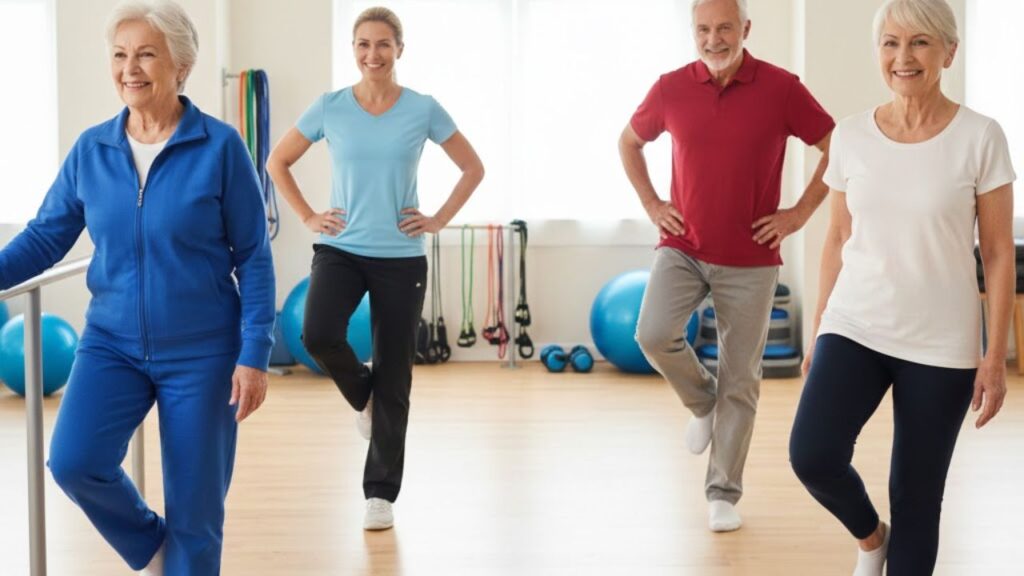
Standing on one leg improves overall stability and coordination. Use a sturdy surface for support if needed. Lift one foot behind you, keeping your body upright, hold, then switch legs. Increase difficulty by closing your eyes or standing on a cushion. This exercise strengthens ankle and hip muscles while enhancing proprioception—your body’s sense of position.
11. Cross-Step Walking to Boost Coordination
Also called the grapevine exercise, cross-step walking challenges coordination and control. Start with feet hip-width apart, arms relaxed or extended for balance. Cross your right foot in front of the left, step left foot out, then cross right behind, continuing this pattern sideways. Reverse to return. This exercise improves body awareness and dynamic balance, making everyday movements smoother and safer.