Short Introduction
If you’re exploring vintage fitness trends for inspiration or cultural insight, 1980s aerobics offers a fascinating case study in how exercise, fashion, and media converged to create a global movement. Over the past year, retro workouts have surged in popularity on platforms like TikTok and Instagram, with users rediscovering Jane Fonda’s routines and Richard Simmons’ energetic videos 1. This revival isn’t just nostalgia—it reflects a growing interest in joyful, accessible forms of movement that prioritize consistency over intensity. If you’re a typical user, you don’t need to overthink this: 1980s aerobics wasn’t about performance metrics or elite conditioning. It was about showing up, moving rhythmically, and feeling good. The real value today lies not in replicating leotards and legwarmers, but in adopting its inclusive spirit and emphasis on daily motion. Two common debates—whether the moves were effective or if the fashion was practical—are largely irrelevant now. What truly matters is the lesson: sustainable fitness often thrives on fun, repetition, and social connection, not complexity.
About 1980s Aerobics
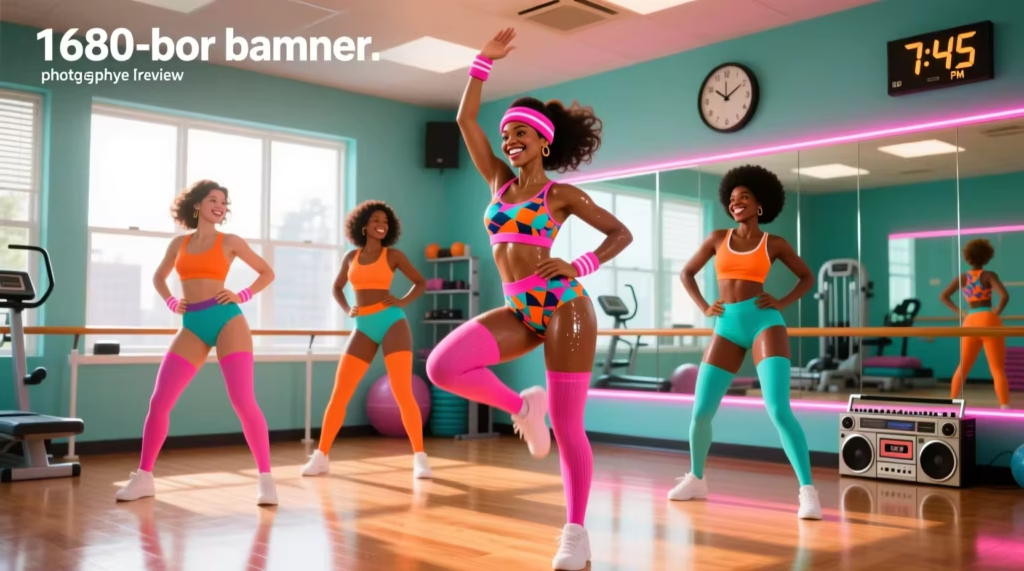
1980s aerobics refers to a style of group-based, dance-inspired cardiovascular exercise that became a mainstream phenomenon during the decade. Rooted in Dr. Kenneth Cooper’s concept of “aerobic” activity—sustained movement that improves heart and lung efficiency—it evolved into choreographed routines set to upbeat music. These sessions typically lasted 30–60 minutes and combined rhythmic stepping, arm movements, and high-energy patterns designed to elevate heart rate 2.
The format was accessible to most fitness levels, often offering low-impact modifications. Unlike today’s HIIT or functional training models, 1980s aerobics focused less on strength or metabolic conditioning and more on rhythm, repetition, and calorie burn through continuous motion. Classes were held in gyms, community centers, and living rooms via VHS tapes, making it one of the first widely adopted at-home workout systems. If you’re a typical user, you don’t need to overthink this: the core idea was simple—move consistently, keep your heart rate up, and enjoy the process.
Why 1980s Aerobics Is Gaining Popularity
Lately, there’s been a noticeable resurgence of interest in 1980s aerobics, driven by cultural nostalgia and a shift toward mindful, low-pressure fitness. Platforms like YouTube and TikTok have reintroduced vintage videos from Jane Fonda, Judi Sheppard Missett (founder of Jazzercise), and Richard Simmons to new generations 3. These clips aren’t just curiosities—they’re being used as actual workout guides, blending retro charm with real physical benefits.
The appeal lies in its contrast to modern fitness culture. While today’s trends often emphasize optimization, tracking, and maximal effort, 1980s aerobics promotes inclusivity, self-expression, and joy. There’s no wearable tech required, no need to hit specific heart rate zones—just movement. This aligns with rising interest in self-care and mindful exercise, where the goal is mental well-being as much as physical change.
This piece isn’t for keyword collectors. It’s for people who will actually use the product.
Approaches and Differences
Three major approaches defined the 1980s aerobics landscape, each with distinct styles and audiences:
| Approach | Key Features | Pros | Cons |
|---|---|---|---|
| Jazzercise | Dance-based, jazz and funk rhythms, structured choreography | Social, fun, beginner-friendly | Less focus on strength or flexibility |
| Jane Fonda Workouts | Televised/VHS routines, blend of aerobics and toning | Highly accessible, iconic influence | Fashion-centric presentation may feel dated |
| Richard Simmons’ Programs | High-energy, motivational coaching, inclusive tone | Emotionally supportive, encourages beginners | Can feel overwhelming due to intensity |
Each method prioritized cardiovascular health and weight management through repetition rather than progressive overload. If you’re a typical user, you don’t need to overthink this: all three delivered similar physiological outcomes—the choice came down to personal preference in teaching style and musical taste.
Key Features and Specifications to Evaluate
When assessing 1980s aerobics as a model for modern practice, consider these measurable elements:
- Heart Rate Zone: Designed to maintain moderate intensity (60–75% max HR)
- Duration: Typically 30–60 minutes per session
- Movement Patterns: Repetitive steps (grapevine, pivot turn, march), arm raises, and kicks
- Music Tempo: 120–150 BPM, matching step frequency
- Impact Level: Offered both high- and low-impact variations
These specifications ensured accessibility while still providing cardiovascular benefit. When it’s worth caring about: if you’re designing a program for older adults or beginners, the low-impact adaptability is valuable. When you don’t need to overthink it: the exact choreography or original music selection—what mattered was consistency, not precision.
Pros and Cons
✅ Pros:
• Encouraged regular participation through fun and music
• Introduced millions to structured home workouts
• Promoted body positivity and non-competitive movement
• Required minimal equipment
❗ Cons:
• Limited focus on strength, balance, or flexibility
• Some repetitive motions posed joint strain risks over time
• Fashion norms (tight clothing, hard floors) weren’t always ergonomic
• Lacked individualization or progression tracking
If you’re a typical user, you don’t need to overthink this: the legacy of 1980s aerobics isn’t in its biomechanical perfection, but in its success at getting sedentary people moving regularly.
How to Choose a 1980s-Style Workout Today
Follow this decision guide when exploring retro aerobics for modern use:
- Define Your Goal: Are you seeking cardio, stress relief, or novelty? If it’s the latter two, vintage aerobics is ideal.
- Assess Accessibility: Look for free online videos (YouTube, TikTok) featuring modified routines.
- Check for Modifications: Ensure the program includes low-impact options to protect joints.
- Evaluate Instructor Tone: Choose upbeat, encouraging leaders (like Simmons or Fonda) if motivation is key.
- Avoid Outdated Norms: Skip routines that encourage excessive range of motion or unsafe flooring.
This approach preserves the best aspects—joy, rhythm, consistency—while avoiding known pitfalls. When it’s worth caring about: if you have mobility concerns, prioritize programs with clear modifications. When you don’t need to overthink it: the authenticity of the costume or music era—function matters more than fashion.
Insights & Cost Analysis
One of the most compelling aspects of 1980s aerobics was its affordability. Original VHS tapes cost $10–$20, and group classes ranged from $5–$15 per session—far below today’s boutique fitness prices. Now, many classic routines are available for free on YouTube, eliminating cost barriers entirely.
Current alternatives like streaming subscriptions ($10–$20/month) or gym memberships ($40+/month) offer more variety but lack the simplicity of a single tape you could replay endlessly. The economic lesson remains relevant: sustainability often increases when cost and complexity decrease.
Better Solutions & Competitor Analysis
While 1980s aerobics laid the foundation, modern hybrids improve upon its limitations:
| Solution | Advantage Over 1980s Model | Potential Drawback | Budget |
|---|---|---|---|
| Low-Impact Zumba | Better joint safety, global music variety | May lack structure for beginners | $0–$15/session |
| Step Aerobics (Modern) | Improved lower-body engagement, better choreography flow | Requires platform purchase (~$30) | $30+ |
| Online Dance Cardio (e.g., CLI Studios) | Professional instruction, diverse styles | Subscription model adds long-term cost | $15–$30/month |
If you want the spirit of 1980s aerobics with updated safety and effectiveness, these are better solutions.
Customer Feedback Synthesis
User reactions to 1980s aerobics content today reflect a mix of admiration and critique:
- Frequent Praise: “It’s so motivating to see people having fun while exercising.” “I didn’t realize how much I missed dancing until I tried this.” “The energy is contagious—even decades later.”
- Common Criticism: “Some moves felt awkward or unnatural.” “The floor is too hard for jumping.” “Clothing looks restrictive.”
The emotional response is overwhelmingly positive, especially around empowerment and nostalgia. Physical critiques tend to focus on outdated form or environment, not the core concept.
Maintenance, Safety & Legal Considerations
No legal regulations governed 1980s aerobics videos, and today’s reuploads exist in a gray area of copyright. However, public domain status or creator permissions allow many classic videos to remain online legally.
Safety-wise, modern practitioners should:
• Use shock-absorbing mats to reduce joint impact
• Avoid locking knees during bounces
• Stay hydrated even during short sessions
• Consult a professional if adapting routines with pre-existing conditions
If you’re a typical user, you don’t need to overthink this: basic movement safety principles apply regardless of era.
Conclusion
If you need a joyful, low-barrier entry point to consistent movement, choosing a 1980s-style aerobics routine—or its modern reinterpretation—can be highly effective. Its enduring appeal lies in simplicity, rhythm, and emotional uplift, not technical sophistication. For those overwhelmed by data-driven fitness apps or intense regimens, this model offers a refreshing alternative: move, breathe, and enjoy the moment. The past doesn’t need to be replicated perfectly to be useful.
FAQs
What was aerobics called in the 80s?
In the 1980s, aerobics was commonly referred to as “aerobic dancing” or branded under names like Jazzercise, Jane Fonda workouts, or Richard Simmons’ programs. The term “aerobics” itself was widely used and understood.
Was aerobics really popular in the 1980s?
Yes, aerobics was extremely popular in the 1980s. By the mid-decade, millions of Americans participated weekly, fueled by celebrity instructors, VHS tapes, and widespread media coverage.
Can I still do 1980s aerobics today?
Yes, many classic routines are available online for free. Modern adaptations also incorporate safer movements and better pacing while preserving the energetic style.
Do I need special clothes or equipment?
No. While leotards and legwarmers were iconic, they’re not necessary. Comfortable athletic wear and supportive shoes are sufficient. A mat can help reduce joint strain.
Is 1980s aerobics good for weight loss?
It can contribute to calorie expenditure and cardiovascular health, which support weight management. However, results depend on consistency, diet, and overall lifestyle—not the era of the workout.