Performing a 2-minute plank every day can significantly improve your core strength, posture, and muscular endurance within a few weeks 1. This simple isometric exercise engages the transversus abdominis, rectus abdominis, obliques, and lower back muscles, creating a stable foundation for movement 2. For beginners, starting with shorter holds and progressing gradually helps prevent strain and builds consistency. Key variations—like forearm planks, side planks, and modified versions—allow adaptation based on fitness level 3. The real benefit comes not from max duration alone, but from daily discipline and proper form.
About the 2-Minute Daily Plank Routine
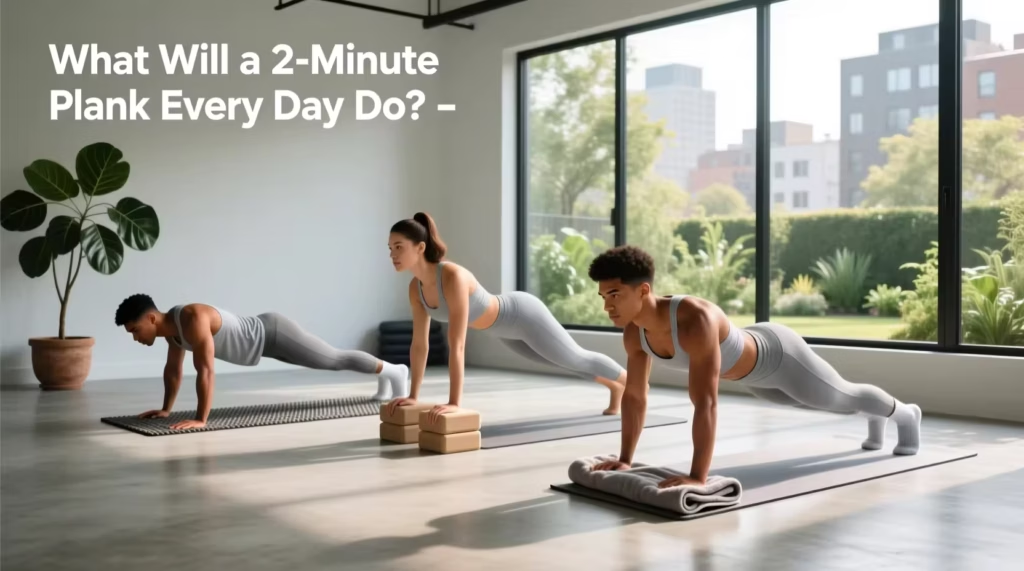
The 2-minute daily plank has become a popular benchmark in functional fitness due to its simplicity and effectiveness. It involves holding a static position—typically a forearm or high plank—for 120 seconds each day, aiming to build endurance and neuromuscular control in the core musculature. Unlike dynamic abdominal exercises, planks emphasize sustained engagement, training the body to stabilize under load.
This routine is commonly used as part of a broader core conditioning program, warm-up sequence, or stand-alone challenge. It requires no equipment and can be performed almost anywhere, making it accessible for people with varying schedules and fitness backgrounds. Whether you’re preparing for athletic performance, improving daily movement efficiency, or simply building physical resilience, the 2-minute plank serves as a practical baseline goal.
Why the 2-Minute Plank Is Gaining Popularity
Core stability is increasingly recognized as essential for overall movement health. As sedentary lifestyles contribute to postural imbalances and reduced trunk control, simple yet effective exercises like the plank offer a low-barrier solution. The appeal of a 2-minute daily plank lies in its measurable nature—it’s a clear target that fosters accountability.
Social media challenges, fitness tracking apps, and community-based programs have amplified its visibility. Many users report noticeable improvements in posture and reduced discomfort during daily activities after just a few weeks of consistent practice 4. Additionally, the mental component—pushing through discomfort and developing discipline—resonates with those seeking both physical and psychological growth.
Approaches and Differences: Types of Plank Exercises
Plank exercises come in various forms, each targeting different muscle groups and offering unique benefits. Choosing the right variation depends on your current strength, goals, and experience level.
✅ Basic Plank Types
- Forearm Plank: Performed on elbows and toes, this version emphasizes core activation with less shoulder strain. Ideal for beginners focusing on form.
- High Plank (Push-Up Position): Hands are placed on the ground with arms extended. Engages more upper body muscles and increases heart rate slightly.
- Side Plank: Targets the obliques and lateral stabilizers. Supports balanced core development and improves hip alignment.
- Reverse Plank: Positions the body facing upward, engaging posterior chain muscles including glutes and hamstrings.
🌱 Beginner-Friendly Variations
- Modified Plank (Knees Down): Reduces intensity while maintaining proper alignment. Helps new practitioners build confidence.
- Mountain Climbers: Adds dynamic motion to increase cardiovascular demand and coordination.
- Plank Hip Dips: Enhances oblique engagement through controlled lateral movement.
⚡ Intermediate Variations
- Plank Up Downs: Alternates between forearm and high plank positions, challenging shoulder stability and core control.
- Bear Plank Shoulder Tap: Involves lifting one hand to tap the opposite shoulder, increasing anti-rotation demand.
- Side Plank Knee Raise: Elevates difficulty by adding leg movement to an already unstable position.
🏋️♀️ Advanced Variations
- RKC Plank: Focuses on maximal tension throughout the body, enhancing full-body stiffness and strength output 5.
- Stir the Pot: Performed on a stability ball, this dynamic movement challenges rotational control and deep core activation.
- Plank Jumps: Introduces plyometric elements, boosting cardio and agility demands.
🔧 Specialized Variations
- Chinese Plank: Emphasizes posterior core strength, supporting spinal integrity during lifting tasks.
- Plank Wiper: Uses sliders or towels to add range of motion, engaging hips and obliques dynamically.
- Band Resisted Plank: Incorporates resistance bands to increase anti-movement challenges in the lumbar region.
📌Key Insight: Not all plank types are equally suited for daily 2-minute holds. Static variations (e.g., forearm plank) are better for endurance, while dynamic moves should be cycled in periodically to avoid overuse.
Key Features and Specifications to Evaluate
To assess the effectiveness of your plank practice, consider these measurable indicators:
- Form Quality: Maintain a straight line from head to heels, avoid sagging hips or raised buttocks.
- Hold Duration: Track progress using standardized benchmarks (see table below).
- Muscle Engagement: Feel activation across the entire core—not just the abs, but also lower back and glutes.
- Breathing Control: Steady, diaphragmatic breathing indicates sustainable effort.
- Recovery Time: Note how quickly you regain normal breathing and muscle relaxation post-hold.
| Performance Level | Hold Time (Seconds) |
|---|---|
| Excellent | > 360 |
| Very Good | 240 – 360 |
| Above Average | 120 – 240 |
| Average | 60 – 120 |
| Below Average | 30 – 60 |
| Poor | 15 – 30 |
| Very Poor | < 15 |
6
Pros and Cons of a Daily 2-Minute Plank
✅ Advantages
- Improved Core Stability: Builds foundational strength critical for all movement patterns.
- Better Posture: Encourages neutral spine alignment, reducing compensatory strain.
- Time-Efficient: Requires only two minutes per day with no equipment needed.
- Mental Discipline: Develops focus and tolerance for discomfort, fostering long-term consistency.
- Low Injury Risk: When performed correctly, planks are safer than many dynamic ab exercises.
❗ Considerations
- Plateau Risk: Holding the same position daily may lead to diminished returns without variation.
- Form Breakdown: Fatigue can compromise technique, especially in later stages of the hold.
- Limited Full-Body Development: Should be complemented with other strength and mobility work.
- Not Suitable for Everyone Initially: Individuals with significant weakness may need to start with shorter durations.
How to Choose the Right Plank Approach
Selecting the best plank strategy depends on your current fitness level and objectives. Follow this step-by-step guide:
- Assess Your Baseline: Try a forearm plank and note how long you can hold with good form.
- Start Below Target: If 2 minutes feels unattainable, begin with 20–30 second holds and increase weekly.
- Prioritize Form Over Duration: Ensure your body remains in a straight line; stop if form deteriorates.
- Vary Your Routine Weekly: Alternate between standard, side, and modified planks to prevent monotony.
- Incorporate Dynamic Versions Sparingly: Use mountain climbers or plank taps 2–3 times per week, not daily.
- Avoid Holding Breath or Neck Strain: Keep gaze slightly ahead, jaw relaxed, and breathe steadily.
- Listen to Your Body: Mild fatigue is expected; sharp pain or dizziness means stop immediately.
❗Avoid This Mistake: Don’t force a full 2-minute hold on day one. Gradual progression prevents burnout and supports sustainable improvement.
Insights & Cost Analysis
The 2-minute daily plank is virtually cost-free. No gym membership, equipment, or specialized attire is required. You can perform it at home, in a hotel room, or outdoors. While some use yoga mats or resistance bands for comfort or added challenge, these are optional enhancements rather than necessities.
Compared to other core-focused workouts (e.g., Pilates classes, stability ball routines), the plank offers exceptional value in terms of time investment and accessibility. Even digital resources like instructional videos or fitness apps are freely available on platforms such as YouTube 7. The primary “cost” is personal commitment—the willingness to show up consistently.
Better Solutions & Competitor Analysis
While the 2-minute plank is effective, combining it with other core exercises yields superior results. Below is a comparison of common core training methods:
| Exercise Type | Key Advantage | Potential Limitation |
|---|---|---|
| 2-Minute Daily Plank | Builds endurance and stability with minimal time | Limited dynamic strength development |
| Ab Wheel Rollouts | High-level anterior core activation | Requires skill and setup space |
| Dead Bugs | Teaches anti-extension with low load | Less endurance-focused |
| Hanging Leg Raises | Develops hip flexor and lower abs control | Needs pull-up bar access |
| Pallof Press | Excellent for anti-rotation training | Requires cable machine or band |
For most individuals, integrating planks into a diverse core routine provides balanced development. Relying solely on planks may overlook rotational and dynamic stabilization needs.
Customer Feedback Synthesis
Based on user experiences shared in fitness communities and journals:
👍 Frequently Reported Benefits
- “I noticed my posture improved within three weeks.”
- “It became easier to carry groceries and lift objects without feeling off-balance.”
- “The mental challenge helped me stay consistent with other habits too.”
👎 Common Challenges
- “My shoulders started aching after a few days—I realized my form was off.”
- “It got boring doing the same thing every day.”
- “I couldn’t make it past 45 seconds initially and felt discouraged.”
Maintenance, Safety & Legal Considerations
To maintain safe and effective plank practice:
- Warm up lightly before starting (e.g., arm circles, cat-cow stretches).
- Perform planks on a non-slip surface to prevent wrist or elbow injury.
- Modify the exercise (e.g., drop to knees) if full form becomes unsustainable.
- Stop immediately if you feel pain, numbness, or excessive dizziness.
There are no legal restrictions on performing planks. However, if used in group fitness instruction or digital content creation, ensure demonstrations include disclaimers about individual variability and encourage consultation with qualified professionals when needed.
Conclusion
If you need a time-efficient way to build core endurance and improve postural control, committing to a 2-minute plank every day is a highly effective starting point. Success depends not on achieving maximum hold time immediately, but on consistent, mindful practice with attention to form. Combine static planks with occasional dynamic variations to keep the routine engaging and comprehensive. Over several weeks, expect to feel greater stability during daily movements and increased confidence in your physical capacity.
Frequently Asked Questions
❓ Can I do planks every day?
Yes, planks can be done daily, especially if you focus on form and allow for recovery. Since they are isometric and low-impact, they generally don’t cause muscle damage requiring rest days. However, vary the type (e.g., alternate forearm and side planks) to avoid overuse.
❓ What if I can’t hold a plank for 2 minutes?
Start with shorter durations—such as 20–30 seconds—and gradually increase by 10–15 seconds per week. Consistency matters more than duration. Most people reach 2 minutes within 3–6 weeks with regular practice.
❓ Does a 2-minute plank burn a lot of calories?
Planks are not high-calorie-burning exercises. A 2-minute plank burns approximately 5–10 calories, depending on body weight. Their primary benefit is building strength and endurance, not fat loss.
❓ Is the plank better than crunches?
Planks engage more muscle groups and promote spinal stability, whereas crunches isolate the rectus abdominis and involve repeated spinal flexion. For overall core health, planks are generally considered safer and more functional.
❓ How long until I see results from daily planks?
Most people notice improved core control and posture within 2–4 weeks. Strength gains and longer hold times typically become evident by week 3 or 4 with consistent daily effort.