A short yoga routine before sleep can help you slow down when your mind feels busy or your body holds tension after a long day. This is not intended as a workout but as a calming transition into rest. These five poses are beginner-friendly and do not require flexibility. They are most effective when paired with slow, steady breathing and a peaceful environment. The goal is to gently signal to your body that it is time to let go and prepare for sleep.
Creating a Calm Space for Better Sleep
Sleep arrives more easily when the body feels relaxed and the mind settles. Gentle yoga movements help release tightness in areas like the hips and shoulders, while controlled breathing encourages the nervous system to slow down. It works like a soft dimmer switch on the day. The poses below are intentionally low effort and can be held comfortably, making them ideal for evening relaxation and mental unwinding before bed.
How Gentle Yoga Supports Deeper Rest
When the body relaxes and the mind exits its constant alert state, falling asleep becomes easier. Gentle yoga eases tension in the hips, lower back, neck, and shoulders. At the same time, steady breathing patterns guide your nervous system toward calm. These poses are slow, soothing, and designed to be held longer, which helps the body shift naturally into sleep mode.

Pose 1: Child’s Pose (Balasana)
Child’s Pose offers a simple way to release the back and hips while calming the nervous system. Begin by kneeling and bringing your big toes together. Separate your knees to a comfortable width, then fold forward until your forehead rests on the mat or a pillow. You may stretch your arms forward for a gentle full-body stretch, or rest them alongside your body for a more enclosed, soothing position.
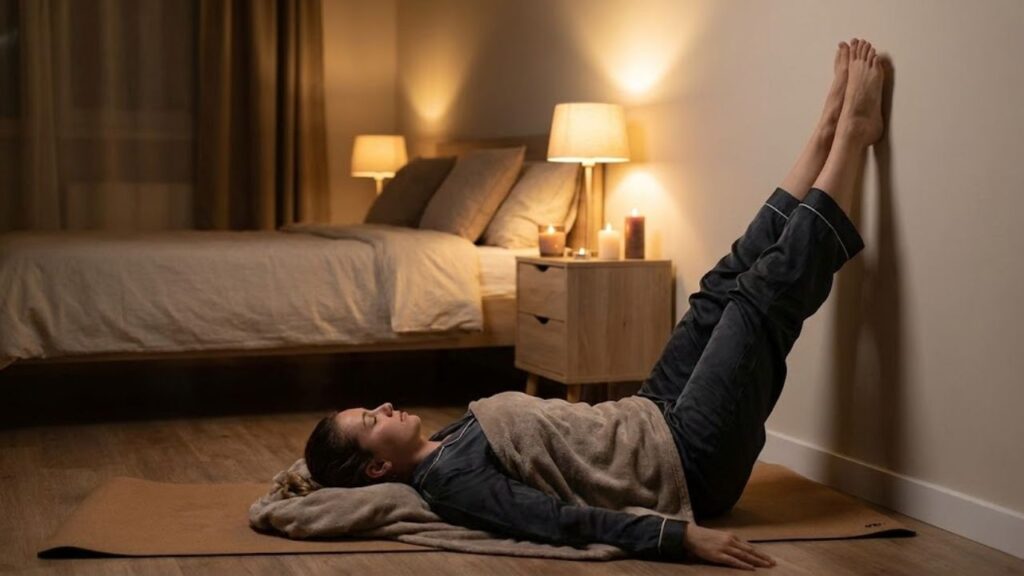
Pose 2: Legs Up the Wall (Viparita Karani)
This pose is especially helpful for tired or heavy legs at the end of the day. Sit beside a wall and gently swing your legs upward as you lie back. Your hips may be close to the wall or slightly away. Add a folded blanket under your hips for lower back support if needed. Rest your arms comfortably and remain here for 3 to 8 minutes. If thoughts arise, softly count your exhales from one to ten and begin again.
Pose 3: Reclining Bound Angle (Supta Baddha Konasana)
This pose encourages hip opening and abdominal relaxation, making it soothing after dinner. Lie on your back, bring the soles of your feet together, and let your knees fall outward. Support each knee with pillows or folded towels to avoid strain. Place one hand on your chest and the other on your stomach. Hold for 2 to 5 minutes, allowing your breath to move naturally while keeping your jaw and tongue relaxed.
Pose 4: Supine Twist (Supta Matsyendrasana)
A gentle twist helps ease lower back tension and promotes relaxation. Lie on your back and draw your knees toward your chest, then let them fall to one side while extending your arms into a T shape. You may turn your head in the opposite direction if comfortable. Stay for one to two minutes per side, focusing on deep rib breathing. Use pillows for support if needed, prioritizing comfort over depth.
Pose 5: Supported Corpse Pose (Savasana)
Supported Savasana allows your body to fully absorb relaxation. Lie on your back with a pillow under your knees to reduce lower back pressure. Cover yourself with a light blanket and rest your arms comfortably. An eye pillow can help if your thoughts remain active. Stay here for 3 to 10 minutes, breathing in for four counts and out for seven, or adjust as needed to keep the breath smooth and unforced.
A Simple Yoga Flow Before Bed
This sequence can be followed as a complete routine: Child’s Pose for 2 minutes, Legs Up the Wall for 5 minutes, Reclining Bound Angle for 3 minutes, Supine Twist for 2 minutes on each side, and Supported Savasana for 3 to 5 minutes. If time is limited, combining Legs Up the Wall with Supported Savasana alone can noticeably shift your mood and readiness for sleep.
Habits That Support Better Sleep Results
Yoga is most effective when paired with supportive habits. Limit afternoon and evening caffeine if it disrupts your sleep. Reduce screen brightness during the final hour before bed and avoid stimulating content. If your mind keeps replaying tasks, write a short list and set it aside. Practice nose breathing during poses and keep your room quiet. Consistency matters most. Repeating this routine regularly helps your body recognize it as a clear signal to rest.