A well-structured 12-week strength training program for runners can improve running economy ✅ and reduce injury risk 🩺, especially when it includes 2–3 weekly sessions focused on hip abductors and quadriceps 🏋️♀️. Research shows low-to-moderate intensity (40–70% of one-repetition maximum) and progressive overload are most effective ⚙️1. Avoid programs lacking a taper phase—opt for those with a 2- to 3-week reduction in volume before race day 📈2. Integration with wearable tech 🌐 or fitness apps can enhance tracking and consistency 🔍.
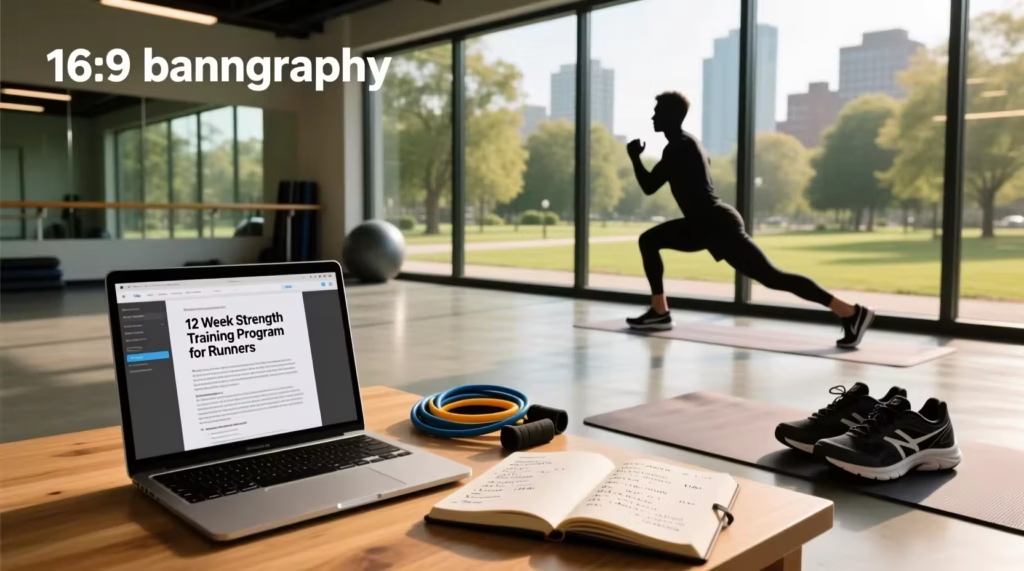
About 12-Week Strength Training Programs for Runners
A 12-week strength training program for runners is a time-bound, structured plan designed to integrate resistance exercises into a runner’s existing routine 🏃♂️. Unlike general fitness plans, these programs prioritize functional strength that supports endurance performance and joint stability. They typically include bodyweight movements, resistance bands, free weights, or plyometrics, focusing on muscle groups critical for running mechanics such as glutes, hamstrings, quads, and core stabilizers.
These programs are commonly used by recreational and competitive runners preparing for races like 10Ks, half-marathons, or full marathons 🥇. The 12-week timeframe aligns well with typical race preparation cycles, allowing sufficient time to build strength without interfering with aerobic conditioning. A key feature is its periodization—dividing the program into phases such as foundation building, intensity progression, and tapering—to optimize adaptation and recovery.
Why 12-Week Strength Training Programs Are Gaining Popularity
The rise in popularity of structured strength training among runners reflects broader trends in the global fitness industry 🌍. With the online fitness market projected to grow from $3.98 billion in 2024 to $25.9 billion by 2033 3, digital tools like downloadable PDF guides and mobile apps have made personalized training more accessible than ever 📎.
Runners increasingly recognize that endurance alone isn’t enough for peak performance ✨. Strength training enhances neuromuscular efficiency, improves stride mechanics, and reduces fatigue over long distances. Additionally, 51% of fitness consumers now value personalization in their workouts 3, making tailored 12-week plans more appealing than generic routines. Wearable technology adoption—used by nearly one in three Americans—further supports engagement by enabling real-time feedback and progress tracking 🌐.
Approaches and Differences
Different approaches to 12-week strength training for runners vary in focus, equipment needs, and integration with running schedules. Below are common models:
- ✅ Bodyweight-Focused Programs: Rely on exercises like squats, lunges, and planks. Ideal for beginners or those without gym access. Pros: Minimal equipment needed; easy to follow at home. Cons: Limited load progression; may not provide enough stimulus for advanced runners.
- 🏋️♀️ Free Weight-Based Programs: Incorporate dumbbells, kettlebells, or barbells. Offer greater resistance and muscle activation. Pros: Better for building maximal strength; scalable intensity. Cons: Require equipment and proper form awareness to avoid strain.
- ⚡ Plyometric-Integrated Plans: Emphasize explosive movements like jump squats and bounding. Enhance power and neuromuscular coordination. Pros: Improve running economy and stride force. Cons: Higher impact; should be introduced gradually to prevent overuse.
- 📱 App-Supported Digital Programs: Delivered via platforms with video demos, reminders, and tracking. Often sync with wearables. Pros: High adherence due to accountability and feedback. Cons: May require subscription; dependent on device compatibility.
Key Features and Specifications to Evaluate
When evaluating a 12-week strength training program for runners, consider these evidence-based criteria:
| Feature | Description | Source |
|---|---|---|
| Frequency | 2–3 sessions per week on non-consecutive running days | 41 |
| Intensity | Low to moderate (40–70% of 1RM); avoids excessive fatigue | 1 |
| Exercise Focus | Targets hip abductors and quadriceps for stability and injury resilience | 4 |
| Progression Model | Gradual increase (~5–9% weekly volume) across weeks 1–8 | 2 |
| Taper Phase | 2- to 3-week reduction (41–60% volume drop) before race | 2 |
Look for clear session breakdowns, exercise illustrations or videos, and alignment with your current running volume. Programs that include mobility work or dynamic warm-ups add functional value 🧘♂️.
Pros and Cons
Understanding the advantages and limitations helps determine if a program fits your lifestyle and goals.
Pros:
- Improves running economy, meaning less energy expenditure at a given pace ✅
- Reduces risk of overuse injuries by strengthening supporting musculature 🛡️
- Enhances mental confidence through physical preparedness 💪
- Structured timeline promotes consistency and measurable progress 📊
Cons:
- Requires time commitment (2–3 additional sessions weekly) ⏳
- Potential for interference if not properly scheduled around key runs ❗
- Limited effectiveness if performed at too high or too low intensity
- May lack adaptability for individual biomechanics without coaching input
How to Choose a 12-Week Strength Training Program: A Step-by-Step Guide
Selecting the right program involves assessing your experience level, schedule, and goals. Follow this checklist:
- Assess Your Running Background: Beginners should opt for bodyweight or low-load programs. Experienced runners may benefit from resistance-based plans with progressive overload.
- Check Program Structure: Ensure it includes a build-up phase (weeks 1–8), peak week (9–10), and taper (11–12) 📈.
- Evaluate Exercise Selection: Prioritize programs emphasizing hip abductors, glutes, and quadriceps—key for pelvic stability during gait.
- Review Session Frequency & Duration: Aim for 30–45 minute sessions, 2–3 times per week, ideally after easy runs or on cross-training days.
- Look for Progression Guidelines: The plan should specify how to increase difficulty—through reps, sets, load, or complexity.
- Confirm Taper Inclusion: Avoid programs ending abruptly; a 2- to 3-week taper is essential for performance optimization.
- Avoid These Pitfalls:
- Programs recommending daily strength training (risk of overtraining)
- Those focusing heavily on upper-body work with minimal lower-body emphasis
- Lack of rest or recovery guidance
- Vague instructions without form cues or alternatives
Insights & Cost Analysis
The cost of a 12-week strength training program varies widely depending on delivery format and support level.
| Format | Features | Typical Cost (USD) |
|---|---|---|
| PDF Download (Self-Guided) | Printable plan, exercise list, weekly schedule | $0–$15 |
| Fitness App Subscription | Video demos, tracking, adaptive planning | $10–$30/month |
| Coached Online Program | Personalized feedback, community, live Q&A | $50–$150 for 12 weeks |
| Free Community Resources | Blog-based plans, forums, YouTube content | Free |
For most runners, a mid-range PDF or app-based solution offers the best balance of affordability and usability. Free resources can be effective but require self-discipline and careful evaluation for scientific accuracy.
Better Solutions & Competitor Analysis
While many standalone PDFs exist, integrated solutions combining strength training with run planning tend to yield better adherence and outcomes.
| Solution Type | Advantages | Potential Issues |
|---|---|---|
| Run-Specific Fitness Apps (e.g., Runna, Nike Run Club + Strength) | Syncs with running schedule; provides audio/video guidance | Subscription model; limited offline access |
| Academic or Clinic-Developed PDFs | Evidence-based; transparent methodology | Less interactive; no progress tracking |
| YouTube Series or Blog Workouts | Free; visual demonstrations | Inconsistent quality; variable programming logic |
Hybrid models—like a downloadable PDF paired with a companion app—are emerging as optimal for runners wanting structure with flexibility.
Customer Feedback Synthesis
Analysis of user reviews and forum discussions reveals common themes:
Frequent Praise:
- “The 12-week timeline felt manageable and kept me accountable.”
- “Noticing fewer aches in my knees and hips during long runs.”
- “Love that each session takes under 40 minutes.”
Common Complaints:
- “Some exercises weren’t clearly explained—wish there were video links.”
- “Too much overlap with hard run days; left me fatigued.”
- “No modifications for minor past injuries or mobility limits.”
Maintenance, Safety & Legal Considerations
To maintain benefits, continue strength training 1–2 times weekly even after the 12-week program ends 🔄. This helps preserve neuromuscular gains and injury resilience.
Safety considerations include warming up before each session, using proper form, and avoiding sudden jumps in intensity. If using equipment, ensure it’s in good condition and used in a safe environment 🧼.
Legally, most digital fitness programs include disclaimers stating they are not medical advice and that users participate at their own risk. Always read terms of use before downloading or purchasing. Programs may vary by region in terms of data privacy practices—review policies if using apps with account creation 🔗.
Conclusion
If you’re preparing for a race and want to enhance performance while reducing injury risk, a science-aligned 12-week strength training program for runners is a valuable addition to your routine. Choose one that includes periodized progression, targets key running muscles, and incorporates a taper phase. For best results, pair it with consistent running, adequate recovery, and objective tracking methods like wearables or training logs 📋. Whether you opt for a free PDF or a premium app-supported plan, consistency and proper timing within your weekly schedule are the true drivers of success.
Frequently Asked Questions
- Can I do strength training on the same day as running?
- Yes, but schedule strength sessions after easy runs or on separate days from intense running workouts to avoid fatigue interference.
- Do I need gym equipment for a 12-week strength program?
- No—many effective programs use bodyweight, resistance bands, or household items. However, adding light weights can enhance progression.
- How soon before a race should I start a 12-week strength program?
- Begin exactly 12 weeks before your target race date to align with the taper phase and maximize performance gains.
- Will strength training make me slower or bulkier as a runner?
- No—when done at appropriate intensity (40–70% 1RM), strength training improves efficiency without adding significant muscle mass.
- Are free PDF programs reliable for runners?
- Some are, especially those developed by sports science institutions. Always check for clear structure, exercise descriptions, and alignment with research principles.