If you commit to holding a 1-minute plank every day for 30 days, you can expect measurable improvements in core strength, posture, and overall functional fitness. While this routine won’t drastically change your weight, it activates deep abdominal muscles, enhances spinal support, and builds endurance 1[12]. Over time, consistent planking improves body awareness, reduces strain during daily movements, and may contribute to a tighter midsection appearance 2. Success depends on proper form, consistency, and gradual progression—not maximum duration.
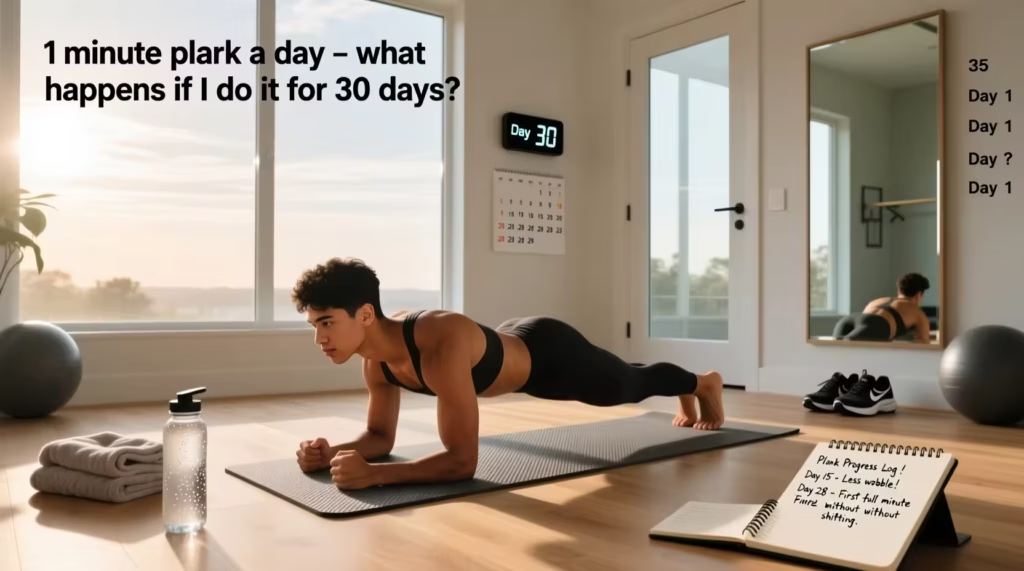
About the 1-Minute Daily Plank Challenge ✅
The 1-minute plank a day for 30 days challenge is a structured fitness habit designed to build core stability through consistent, short-duration isometric exercise. Unlike high-intensity workouts, this approach focuses on sustainability and correct technique. The plank targets major muscle groups in the abdomen, lower back, shoulders, and glutes by requiring them to maintain a static position—typically a straight line from head to heels with weight supported on forearms and toes.
This method is often used as an entry point into strength training or as a supplement to existing routines. It’s especially popular among individuals seeking low-equipment, time-efficient exercises that fit into busy schedules. Whether performed in the morning or between work tasks, the daily one-minute commitment emphasizes discipline over intensity, making it accessible for beginners and effective for long-term habit formation.
Why the 30-Day Plank Challenge Is Gaining Popularity 🌐
The 30-day plank challenge has become a widely shared fitness trend due to its simplicity, minimal time requirement, and visible outcomes. Social media platforms frequently feature before-and-after photos and personal testimonials highlighting improved core definition and posture after completing the challenge 3. Its appeal lies in the low barrier to entry—no gym membership, equipment, or prior experience is needed.
Moreover, users report psychological benefits such as increased mental stamina and confidence from meeting a daily physical goal 4. For those exploring self-care practices like mindful movement or body awareness, the plank serves as both a physical and mental exercise. As more people prioritize holistic well-being, simple routines like this offer tangible progress without overwhelming lifestyle changes.
Approaches and Differences ⚙️
While the standard forearm plank is most common, several variations exist to accommodate different fitness levels and goals:
- Standard Forearm Plank: Performed on elbows and toes, engages full core. Best for intermediate to advanced practitioners.
- Modified Knee Plank: Reduces load by placing knees on the ground. Ideal for beginners building initial strength.
- High Plank (Straight-Arm): Uses hands instead of forearms. Increases shoulder engagement but may be harder for those with wrist sensitivity.
- Elevated Plank: Hands placed on a bench or step reduce body angle and intensity. Useful for early-stage progression.
Each variation affects muscle activation differently. The key is selecting an approach that allows you to maintain proper alignment for the full minute without compromising form.
Key Features and Specifications to Evaluate 📊
To assess progress during a 30-day plank routine, focus on measurable and observable indicators rather than subjective feelings alone:
- Hold Duration: Track how long you can maintain proper form each day. Improvement indicates enhanced muscular endurance.
- Body Alignment: Use mirrors or recordings to ensure a straight line from head to heels, avoiding hip sagging or hiking.
- Muscle Engagement: Notice whether core, glutes, and shoulder stabilizers feel activated throughout the hold.
- Postural Awareness: Observe if standing or sitting posture improves over time, especially after prolonged sedentary periods.
- Functional Ease: Note whether everyday activities like lifting objects or bending feel less strenuous.
These metrics provide objective feedback on the effectiveness of your practice and help identify areas needing adjustment.
Pros and Cons 📈
✅ Pros: Builds core strength efficiently, improves posture, requires no equipment, enhances body awareness, supports functional movement, boosts mental resilience.
❗ Cons: Limited calorie burn, risk of poor form leading to strain, minimal impact on cardiovascular fitness, results may plateau without progression.
This routine is best suited for individuals aiming to strengthen their midsection, improve stability, or establish a consistent movement habit. It’s less effective for those primarily seeking fat loss or cardiovascular conditioning, unless combined with other forms of exercise.
How to Choose the Right Plank Approach 📋
Selecting the appropriate plank variation involves assessing current fitness level and setting realistic expectations:
- Evaluate Starting Strength: If holding a standard plank for 20 seconds is difficult, begin with a modified knee or elevated version.
- Prioritize Form Over Time: Focus on maintaining a neutral spine and engaged core—even if it means reducing duration initially.
- Schedule Consistently: Perform the plank at the same time daily (e.g., upon waking) to reinforce habit formation.
- Avoid Common Mistakes: Do not let hips rise or drop, neck crane forward, or shoulders shrug toward ears. These reduce effectiveness and increase injury risk.
- Progress Gradually: Once you can comfortably hold a 1-minute plank with good form, consider increasing difficulty (e.g., side planks, dynamic holds).
The goal is sustainable improvement, not immediate perfection.
Insights & Cost Analysis 💰
The 1-minute daily plank challenge is entirely free and requires no special gear. However, some users incorporate tools like yoga mats, timers, or posture mirrors to enhance comfort and accuracy. These items are optional and vary in price:
- Basic Yoga Mat: $15–$30
- Digital Timer App: Free–$5
- Wall-Mounted Mirror: $20–$60
Overall, this routine offers exceptional value for improving core function with minimal financial investment. Since results stem from consistency rather than equipment quality, cost does not correlate with outcome.
Better Solutions & Competitor Analysis
| Exercise Type | Core Benefit | Potential Limitation | Budget |
|---|---|---|---|
| 1-Minute Daily Plank | Stability, endurance, posture | Limited metabolic demand | Free |
| Dynamic Core Circuit (e.g., crunches, leg raises) | Muscle hypertrophy, higher calorie burn | Higher injury risk with poor form | $0–$50 (optional equipment) |
| Resistance Training with Core Integration | Full-body strength + core activation | Requires equipment/time | $20–$200+ |
While planks excel in stability training, combining them with dynamic movements may yield broader fitness gains. However, for isolated core endurance and habit-building, the daily plank remains unmatched in accessibility.
Customer Feedback Synthesis 📎
Analysis of participant experiences from published challenges reveals recurring themes:
Frequent Positive Outcomes:
- “My posture feels noticeably better after sitting all day.” 3
- “I can lift heavy bags now without feeling strain in my back.” 4
- “It took discipline, but finishing each day gave me a sense of accomplishment.” 5
Common Challenges:
- Difficulty maintaining motivation in the first week.
- Temptation to shorten form near the end of the minute.
- Initial discomfort in shoulders or wrists.
Success often correlates with tracking progress and integrating the plank into an existing morning or workout routine.
Maintenance, Safety & Legal Considerations 🩺
To maintain long-term benefits, transition from the 30-day challenge to a progressive plan—such as increasing hold time, adding side planks, or incorporating movement. Always warm up lightly before performing isometric holds to prepare muscles.
Safety hinges on correct execution: avoid locking joints, keep breathing steadily, and stop immediately if sharp pain occurs. This activity is generally safe for healthy adults but should be adjusted based on individual capability. No legal restrictions apply, though workplaces or schools implementing group challenges should ensure voluntary participation.
Conclusion: A Sustainable Step Toward Functional Fitness ✨
If you need a simple, time-efficient way to strengthen your core and improve daily movement efficiency, committing to a 1-minute plank every day for 30 days is a practical starting point. Results include better posture, increased core endurance, and enhanced body awareness—all achievable without equipment or significant time investment. The real benefit lies not just in physical changes, but in building consistency and discipline. If your goal is foundational core stability and habit development, this challenge delivers meaningful progress when performed with attention to form and regularity.
Frequently Asked Questions ❓
- What happens if I do a 1-minute plank every day for 30 days? You can expect improved core strength, better posture, increased body awareness, and potentially a tighter midsection appearance due to muscle activation.
- Can planking every day help flatten my stomach? Planks engage deep abdominal muscles which may create a firmer, flatter look over time, though visible changes depend on overall body composition.
- Is it safe to do a plank every day? Yes, for most people, as long as proper form is maintained and any discomfort is addressed promptly.
- What is the correct form for a plank? Your body should form a straight line from head to heels, with core braced, glutes engaged, and neck neutral—avoid arching or sagging.
- How long until I see results from daily planking? Many notice improved endurance within two weeks; physical changes in posture and core tone typically appear by day 21–30.