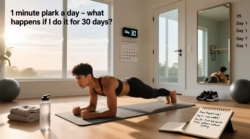
Doing a 1-minute plank every day can significantly improve your core strength, posture, and stability within a few weeks 12. This simple isometric exercise engages multiple muscle groups—including the transversus abdominis, obliques, glutes, shoulders, and back—making it an efficient way to build functional endurance 3. While it won’t give you a six-pack on its own, consistent planking supports better movement patterns, reduces strain during daily activities, and strengthens the muscles that stabilize your spine. For best results, focus on proper form and gradually increase intensity to avoid plateauing.
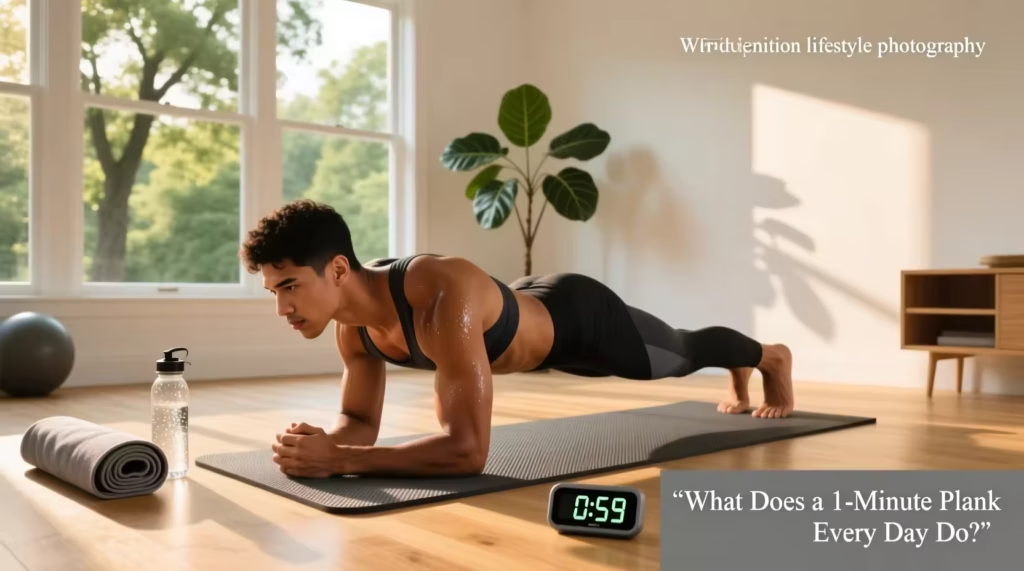
✅ Key Takeaway: A daily 1-minute plank is ideal for beginners seeking improved core engagement and postural alignment. Pair it with balanced nutrition and varied movement for long-term progress.
About the 1-Minute Daily Plank
The plank is an isometric bodyweight exercise where you hold a push-up-like position, either on your hands or forearms, while keeping your body in a straight line from head to heels 3. The 1-minute daily variation has become a popular minimalist fitness habit due to its low time commitment and high functional return. It requires no equipment and can be done almost anywhere—making it accessible whether you’re at home, traveling, or short on time.
This routine primarily targets the core musculature but also activates the shoulders, chest, back, glutes, and legs to maintain stability 4. Unlike dynamic ab exercises like crunches, planks emphasize sustained muscle contraction, which builds endurance and neuromuscular control. Because of this, it’s often recommended as part of foundational training for people new to fitness or those rebuilding strength after periods of inactivity.
Why the 1-Minute Daily Plank Is Gaining Popularity
In today’s fast-paced lifestyle, many people struggle to find time for lengthy workouts. The appeal of doing a single 1-minute plank each day lies in its simplicity and consistency. It fits into micro-workout trends that prioritize sustainable habits over intense, unsustainable regimens 5.
Social media challenges and wellness influencers have further amplified its visibility, promoting the idea that small, daily actions compound into meaningful change. Additionally, because planks require no gear or gym membership, they align well with inclusive fitness messaging. People view the 1-minute plank not just as a physical challenge, but as a mental one—testing discipline, focus, and perseverance.
Approaches and Differences
While the standard forearm or high plank is most common, several variations exist to suit different fitness levels and goals:
- 🧘♂️ Forearm Plank: Easier on wrists; ideal for beginners. Engages deep core stabilizers effectively.
- 🏋️♀️ High (Straight-Arm) Plank: Increases shoulder activation but may stress wrists more.
- 👉 Side Plank: Targets obliques and improves lateral stability; excellent for balanced core development.
- 膝盖 Modified (Knee) Plank: Reduces load for those building initial strength without sacrificing form.
- ⬆️ Elevated Plank: Hands on bench or step; decreases difficulty by shifting weight backward.
Each version offers unique benefits, but all rely on maintaining a neutral spine and engaged core. Choosing the right approach depends on your current strength, joint comfort, and specific objectives—such as injury prevention, balance improvement, or preparing for more advanced movements.
Key Features and Specifications to Evaluate
To assess whether your plank practice is effective, consider these measurable indicators:
- ⚡ Form Quality: A straight body line, retracted shoulders, and braced core are non-negotiable. Poor form diminishes results and increases strain risk 6.
- ⏱️ Hold Duration: Start with 20–30 seconds if needed. Progress toward 60 seconds indicates solid isometric endurance.
- 📈 Progressive Overload: Once 1 minute feels easy, extend duration or try harder variations to keep challenging muscles.
- 🫁 Breathing Control: Steady breathing shows muscular efficiency. Holding your breath suggests excessive tension.
- 📊 Functional Carryover: Notice improvements in standing posture, lifting ease, or reduced lower back discomfort during daily tasks.
Pros and Cons
| Aspect | Pros | Cons |
|---|---|---|
| Time Efficiency | Takes only 1 minute; easy to schedule daily | Limited cardiovascular benefit |
| Muscle Engagement | Activates full-body stabilizing muscles | Not sufficient alone for hypertrophy |
| Accessibility | No equipment or space required | May cause wrist or shoulder strain if form is poor |
| Habit Formation | Builds consistency and mental resilience | Risk of plateau without progression |
| Injury Prevention | Supports spinal alignment and joint stability | Can aggravate pre-existing conditions if misaligned |
How to Choose the Right Plank Routine
Selecting the best plank strategy involves matching the exercise to your current ability and long-term goals. Follow this step-by-step guide:
- 📌 Assess Your Starting Point: Can you hold a plank for 20 seconds with good form? If not, begin with modified or elevated versions.
- 🔍 Prioritize Form Over Time: Focus on alignment before increasing duration. Use a mirror or record yourself to check technique.
- 📋 Set Realistic Goals: Aim to reach 1 minute within 2–4 weeks through incremental increases (e.g., +10 seconds weekly).
- 🔄 Vary the Type Weekly: Alternate between forearm, side, and high planks to engage different muscle fibers.
- ❗ Avoid These Pitfalls:
- Sagging hips or raised buttocks
- Holding breath or tensing neck
- Pushing through pain in joints
- Skipping rest days entirely (daily planks are okay, but listen to your body)
Insights & Cost Analysis
The 1-minute daily plank costs nothing and requires minimal space. Compared to other core-focused tools like stability balls ($20–$50), resistance bands ($10–$30), or gym memberships ($40–$150/month), planking offers unmatched cost-efficiency. Its value lies in accessibility and integration into existing routines—no scheduling conflicts, travel, or special attire needed.
However, for continued progress beyond basic endurance, consider pairing planks with other bodyweight or resistance exercises. While no financial investment is required, dedicating focused time and attention ensures better outcomes than treating it as a passive checkbox task.
Better Solutions & Competitor Analysis
While the 1-minute plank is effective, combining it with complementary exercises yields greater functional gains. Below is a comparison of plank-centric routines versus broader core programs:
| Approach | Best For | Potential Limitations |
|---|---|---|
| Daily 1-Minute Plank | Beginners, habit-building, posture improvement | Limited strength/muscle growth potential |
| Plank Variations Circuit (e.g., side, reverse, moving planks) |
Intermediate users seeking variety and challenge | Requires more time and coordination |
| Full Core Routine (planks + crunches + leg raises + bird-dog) |
Comprehensive strength and muscle balance | Takes 10–15 minutes; steeper learning curve |
| Integrated Strength Training (compound lifts + planks) |
Maximal functional fitness and body composition changes | May require equipment or guidance |
Customer Feedback Synthesis
User experiences with the 1-minute daily plank reveal consistent themes:
- ✨ Frequent Praise:
- “I noticed better posture within two weeks. My back feels stronger when sitting all day.”
- “It’s motivating to complete a quick win first thing in the morning.”
- “My abs feel tighter, even though I haven’t changed my diet.”
- ❗ Common Complaints:
- “After a month, I stopped seeing progress—felt stuck.”
- “My wrists hurt during high planks, so I had to switch to forearms.”
- “Hard to stay consistent without tracking progress.”
Maintenance, Safety & Legal Considerations
To maintain long-term benefits and minimize risks:
- 🔧 Maintenance Tip: Reassess your plank performance every 3–4 weeks. If 60 seconds becomes easy, add 10–15 seconds or try a harder variation.
- 🛑 Safety First: Stop immediately if you feel sharp pain, especially in the lower back, neck, or shoulders. Discomfort should be muscular fatigue, not joint strain.
- ⚖️ Legal Note: Exercise content is general guidance and not a substitute for personalized instruction. Always consult a qualified fitness professional if unsure about technique or suitability.
Conclusion
If you need a simple, time-efficient way to build core endurance, improve posture, and support daily movement, doing a 1-minute plank every day is a strong starting point 7. It’s particularly beneficial for beginners or anyone looking to establish a consistent physical habit. However, to achieve noticeable muscle definition or significant strength gains, combine planks with progressive overload, diverse exercises, and mindful nutrition. Prioritize correct form over duration, and remember that sustainability matters more than intensity in the long run.
FAQs
What does a 1-minute plank every day do?
A daily 1-minute plank builds core endurance, improves posture, enhances stability, and supports functional movement. Over time, it can lead to better body awareness and reduced strain during daily activities.
Will a 1-minute plank every day give me abs?
Planks strengthen and tone abdominal muscles, but visible abs depend on overall body fat percentage. Achieving a leaner midsection requires combining planks with full-body strength training and balanced nutrition.
Is it safe to do a plank every day?
Yes, for most people, as long as proper form is maintained. Daily planks are generally safe if performed with correct alignment and without pushing through pain. Listen to your body and allow recovery if needed.
How long until I see results from planking every day?
Many notice improved core stability and posture within 2–4 weeks. More defined muscle tone may take several months and depends on consistency, diet, and overall activity level.
What’s the correct form for a plank?
Keep your body in a straight line from head to heels, engage your core and glutes, position elbows under shoulders (forearm plank), and avoid hiking hips or sagging lower back. Keep your neck neutral by gazing slightly ahead on the floor.