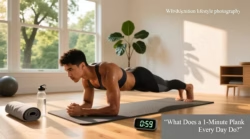
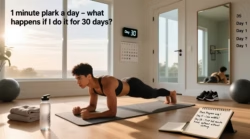
✅ Performing a 1-minute plank every day can significantly improve your core strength, posture, and functional stability over time. Scientific studies show measurable gains in muscle endurance and body composition with consistent practice 1. While it won’t give you visible abs alone, it supports overall fitness when combined with balanced nutrition and full-body movement. Proper form is crucial—poor alignment risks strain, especially in wrists, shoulders, or lower back 2. For most people, daily planking is safe and effective if done correctly and progressively.
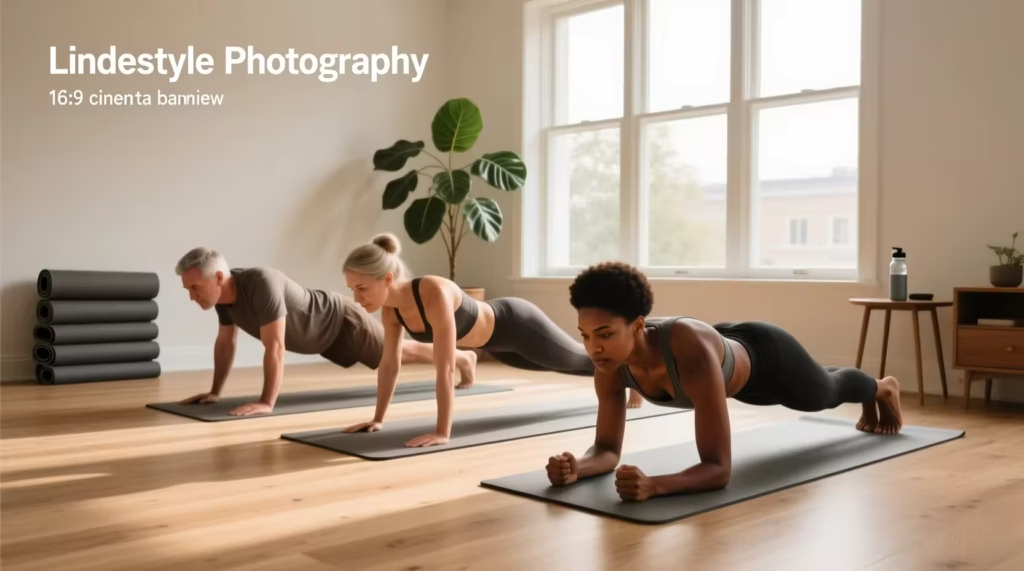
About the 1-Minute Daily Plank
⚡ The 1-minute plank every day is a popular minimalist fitness challenge designed to build core strength through consistency rather than intensity. It involves holding a forearm plank position for 60 seconds each day, engaging multiple muscle groups including the abdominals, glutes, shoulders, and spinal stabilizers 3. Unlike high-volume workouts, this approach emphasizes sustainability and proper technique.
This routine fits into various lifestyles—office workers use it as a midday reset, athletes incorporate it for injury prevention, and beginners adopt it as an entry point to strength training. Because it requires no equipment and takes less than two minutes total (including setup), it’s highly accessible. However, success depends on correct form: elbows under shoulders, body in a straight line, and core actively engaged throughout.
Why the 1-Minute Plank Challenge Is Gaining Popularity
📌 The appeal of the “1-minute plank every day” lies in its simplicity and perceived low barrier to entry. In an era of time-poor routines and digital distractions, micro-workouts like this offer a sense of accomplishment without demanding large time investments. Social media trends and wellness influencers have amplified its visibility, often showcasing personal transformation stories after 30 or 60 days of commitment.
People are drawn to structured, measurable goals—holding a static position for one minute provides clear feedback on progress. Additionally, the mental aspect resonates: completing a physically challenging task daily fosters discipline and confidence 4. As more individuals seek non-intimidating ways to stay active, this habit-based exercise continues to grow in popularity across diverse age groups.
Approaches and Differences
There are several variations of the daily plank routine, each suited to different fitness levels and objectives:
- 🧘♂️ Standard Forearm Plank (Most Common): Elbows on the ground, body aligned from head to heels. Best for beginners focusing on form.
- 🏃♂️ High Plank (Push-Up Position): Hands on the floor, arms extended. Increases shoulder engagement but may be harder on wrists.
- 🔄 Side Plank Alternatives: Targets obliques more directly. Can be used as a complement or substitute for those with wrist discomfort.
- ⏱️ Progressive Duration Approach: Start with 20–30 seconds and increase by 10–15 seconds weekly until reaching 60 seconds 5.
While all methods strengthen the core, the standard forearm plank is generally recommended for daily practice due to lower joint stress and higher activation of deep abdominal muscles like the transversus abdominis.
Key Features and Specifications to Evaluate
When assessing the effectiveness of a daily 1-minute plank, consider these measurable outcomes:
- 📈 Core Endurance: Track how long you can hold a plank beyond 60 seconds over weeks.
- 📏 Postural Alignment: Observe standing and sitting posture improvements—less slouching, reduced forward head tilt.
- ⚖️ Body Composition Changes: Monitor waist circumference or clothing fit, not just weight 1.
- 🧠 Mental Resilience: Note increases in focus, discipline, or mood after sustained practice.
- 🔧 Form Quality: Use mirrors or video recordings to ensure consistent alignment and avoid sagging hips or raised buttocks.
These indicators help determine whether the routine is delivering intended benefits and guide adjustments in execution or progression.
Pros and Cons
| Aspect | Pros | Cons |
|---|---|---|
| Time Efficiency | Takes less than 2 minutes daily; easy to schedule | Limited cardiovascular benefit |
| Muscle Engagement | Activates core, glutes, shoulders, and back simultaneously | Risk of improper form leading to strain |
| Injury Prevention | Improves spinal stability and reduces risk of back pain | Not suitable for those with acute joint instability |
| Habit Formation | Builds consistency and mental toughness | May plateau without variation or progression |
How to Choose the Right Plank Routine
📋 Follow this step-by-step guide to implement a safe and effective 1-minute daily plank plan:
- Assess Your Starting Point: Try holding a plank for as long as possible with good form. If under 20 seconds, begin with shorter holds.
- Pick the Right Variation: Choose forearm plank unless contraindicated by wrist issues.
- Schedule It Consistently: Pair it with an existing habit—after brushing teeth or before coffee.
- Focus on Form Over Time: Keep your body in a straight line, engage your core, and breathe steadily.
- Progress Gradually: Once you can comfortably hold 60 seconds, add 10–15 seconds weekly or introduce side planks.
❗ Avoid these common mistakes: Holding breath, hiking hips too high, letting lower back sag, or rushing into longer durations without mastering form.
Insights & Cost Analysis
🛒 The 1-minute daily plank requires no financial investment—it can be done anywhere using only body weight. No special gear, apps, or subscriptions are needed, making it one of the most cost-effective fitness habits available. While tools like yoga mats or timers can enhance comfort and tracking, they are optional.
Compared to gym memberships (averaging $40–$80/month) or fitness classes, this routine offers significant value for minimal time and zero recurring cost. Its primary “cost” is consistency and attention to technique, not money.
Better Solutions & Competitor Analysis
For those seeking broader functional gains, combining planks with other movements may yield better overall results. Below is a comparison of related core-focused routines:
| Exercise Type | Best For | Potential Issues |
|---|---|---|
| Daily 1-Minute Plank | Building foundational core endurance and habit consistency | Limited dynamic strength development |
| Full-Body Isometric Circuit | Enhancing total-body stability and coordination | Requires more time and planning |
| Dynamic Core Workouts (e.g., bird-dog, dead bug) | Improving neuromuscular control and spinal mobility | May require instruction for proper execution |
The 1-minute plank remains ideal for beginners or those prioritizing simplicity. More advanced users may benefit from integrating it into a varied routine.
Customer Feedback Synthesis
🔍 Real-world experiences from individuals who’ve completed a 30- to 90-day plank challenge reveal recurring themes:
Frequent Positive Feedback:
- “I stand taller and feel more balanced during daily tasks.”
- “It’s become a mental checkpoint—I start my day feeling accomplished.”
- “My lower back feels stronger, especially after long sits.”
Common Complaints:
- “My wrists hurt after a few days—switching to forearms helped.”
- “After week three, I stopped seeing changes—plateaued quickly.”
- “Hard to maintain motivation when results aren’t immediate.”
These insights highlight the importance of modification options and realistic expectations.
Maintenance, Safety & Legal Considerations
🩺 Maintaining safety while performing a daily plank involves regular self-assessment. Listen to your body: if you experience sharp pain (not muscular fatigue), stop immediately. Individuals with pre-existing joint concerns should consult a qualified movement professional before starting.
To maintain progress, periodically reassess form using video or mirrors. Rotate plank types (e.g., side planks every few days) to prevent overuse patterns. There are no legal restrictions on planking, but public performances (e.g., “planking challenges”) should respect local ordinances and private property rules.
Conclusion
If you need a simple, time-efficient way to build core strength, improve posture, and develop daily discipline, committing to a 1-minute plank every day is a practical choice. It delivers measurable physical and mental benefits when performed with correct technique and consistency. However, it should be viewed as a foundational habit—not a standalone solution for comprehensive fitness. Combine it with balanced movement, mindful breathing, and whole-body activity for optimal results.
Frequently Asked Questions
- What happens if I do a 1-minute plank every day? Over time, you’ll likely see improved core endurance, better posture, increased body awareness, and enhanced functional strength for everyday movements.
- Will a daily plank give me abs? Planking strengthens abdominal muscles, but visible abs depend on overall body fat levels, which require dietary management and full-body exercise.
- Is it safe to do a plank every day? Yes, for most people, as long as proper form is maintained and any pre-existing joint issues are considered.
- How long until I see results from daily planking? Many notice improved stability and posture within 2–4 weeks; measurable strength gains typically appear after 6–8 weeks of consistent practice.
- Can I modify the plank if I have wrist pain? Yes—perform the exercise on your forearms instead of hands, or try an incline plank against a wall or sturdy surface.