New research suggests that not only the amount of alcohol, but the kind of drink in your glass, could shape your cancer risk in ways that many social drinkers do not suspect.
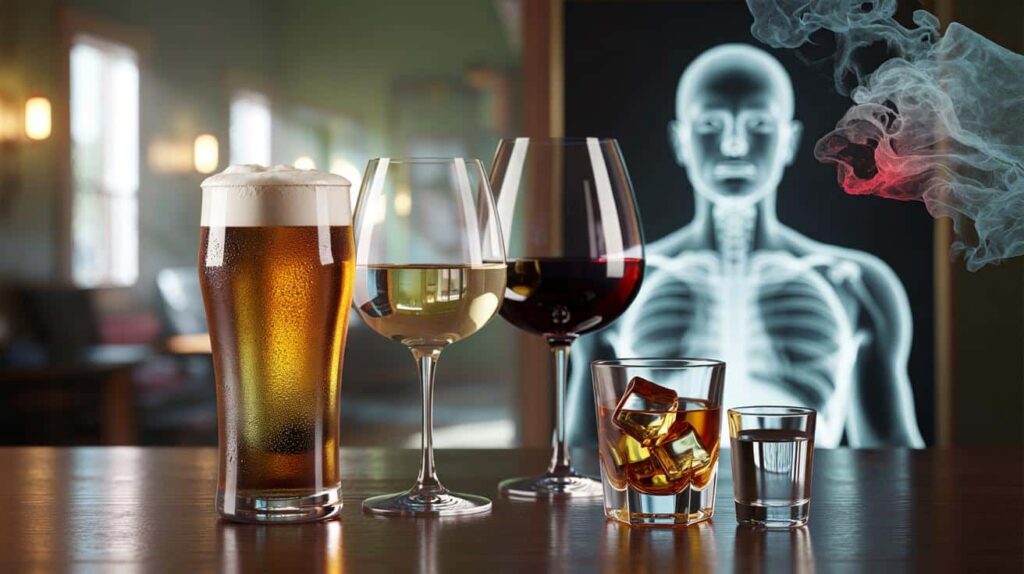
Alcohol and cancer: more than just “how much you drink”
For years, public health messages focused on heavy drinking and liver damage. That picture now looks too narrow. Large US and European studies, following hundreds of thousands of adults for decades, show that even low or moderate drinking can nudge up the risk of several cancers.
Alcohol has been linked to cancers of the breast, colon, liver and upper airways, even at levels many people consider harmless.

Researchers now talk less about “safe” drinking and more about patterns:
- Frequency – a glass most evenings is not equivalent to a monthly night out, even if weekly totals match.
- Bingeing – several drinks in a short window gives organs and tissues a high, sudden blast of ethanol.
- Context – drinking with food slows absorption; drinking on an empty stomach accelerates it.
- Life course – what you drink in your 20s can still influence your cancer risk in your 50s.
Two friends might drink the same number of units yet face different odds of disease. Age, sex, body weight, hormonal status, income, liver health and genetic variants that control how alcohol is broken down all shape vulnerability.
That helps explain why women who drink modestly can still face a measurable rise in breast cancer risk, while some men appear less affected at the same intake, yet more exposed for cancers of the throat or oesophagus.
The drink itself matters: beer, wine and spirits are not identical
The message that “a unit is a unit” has a point: ethanol is the main carcinogenic driver. Still, emerging data show that beer, wine and spirits do not behave identically once they hit the body.
Beer and cancers of the digestive tract
Several epidemiological reviews find stronger links between beer drinking and cancers along the digestive tube, from mouth to colon. Part of this reflects volume: beer is often consumed in larger quantities at one sitting.
Fermentation by-products, residual sugars and certain compounds derived from barley and hops may also interact with gut bacteria. That interaction can influence inflammation, a known factor in tumour development.
High-volume beer sessions tend to deliver both a lot of ethanol and a long soak of the digestive lining in alcohol-rich fluid.
Wine: red, white and mixed messages
Wine carries a contradictory image. Red wine has long been marketed as “heart friendly”, thanks to polyphenols such as resveratrol. Cancer data paint a less flattering picture.
Large analyses show consistent associations between wine drinking and breast cancer, particularly with white wine. Some hypotheses focus on:
- Higher acetaldehyde formation during white wine production.
- Different antioxidant profiles compared with red wine.
- Drinking patterns, such as daily small glasses at home.
Red wine sometimes shows slightly weaker associations in studies, yet no reliable protective effect against cancer has been demonstrated. Any potential benefit from plant compounds is easily overshadowed by the damage from ethanol itself.
Spirits: short drinks, sharp impact
Spirits such as vodka, whisky or rum typically contain far more alcohol per volume than beer or wine. They are often consumed quickly, in shots or mixed drinks, and frequently outside mealtimes.
Fast, food-free spirit drinking sends blood alcohol levels up sharply, bathing sensitive tissues of the mouth, throat and oesophagus in concentrated ethanol.
Study results about spirits are more mixed, partly because people combine them with beer or wine and often under-report intake. Yet the way spirits are consumed – rapidly, in social bursts – tends to favour higher peaks of exposure, which matters for DNA damage.
How alcohol increases cancer risk inside the body
Once swallowed, alcohol travels rapidly from mouth to bloodstream, then to the liver. The body tries to detoxify it through a chemical chain that carries its own dangers.
 Meteorologists warn February is approaching with signs of an Arctic disruption rarely documented
| Stage | What happens | Why it matters for cancer |
|---|---|---|
| Ethanol | Absorbed through mouth, stomach and intestines. | Directly irritates mucous membranes. |
| Acetaldehyde | Liver enzymes convert ethanol into acetaldehyde. | Highly reactive, forms bonds with DNA and proteins. |
| Further breakdown | Acetaldehyde is turned into acetate, then water and CO₂. | People who process acetaldehyde slowly face longer exposure. |
Acetaldehyde is the key villain. It damages DNA and interferes with the cell’s ability to repair that damage. At the same time, alcohol metabolism generates free radicals, fuelling oxidative stress and chronic inflammation. Both are fertile conditions for cancer cells to emerge and multiply.
For hormone-sensitive cancers, like many breast tumours, alcohol has an additional route of harm. Regular drinking tends to raise oestrogen levels and can alter how breast tissue responds to hormonal signals.
When risk factors stack up
Alcohol rarely acts alone. The same people who drink heavily might also smoke, sleep poorly, exercise little or have diets rich in processed meat and low in fibre.
Alcohol and tobacco together create a far higher risk of cancers of the mouth, throat and larynx than either factor on its own.
Chronic infections matter too. Hepatitis B or C can already strain the liver. Adding alcohol increases inflammation and speeds the path towards cirrhosis and liver cancer. Infection with Helicobacter pylori, a bacterium linked to stomach ulcers, may interact with alcohol to irritate the stomach lining further.
Certain medical conditions, such as obesity, type 2 diabetes or fatty liver disease, intensify how alcohol affects organs. This is one reason some individuals develop cancer at drinking levels that others tolerate for years.
Changing drinking habits to lower cancer risk
Health agencies now frame alcohol guidelines as risk thresholds, not guarantees of safety. Each extra drink adds a little more probability of harm over a lifetime.
Several practical shifts can make a difference:
- Keep most days alcohol-free, rather than spreading smaller amounts across the entire week.
- Avoid “catching up” with heavy weekend sessions.
- Drink slowly and with food to reduce blood alcohol spikes.
- Alternate alcoholic drinks with water or soft drinks during social events.
- Skip smoking when drinking, as the combination hits the same tissues.
There is no level of drinking that completely removes cancer risk, but lower and less frequent intake reduces the odds.
For people with a strong family history of breast, colon or head and neck cancers, even small adjustments in alcohol habits may bring worthwhile benefits over decades.
Making sense of “moderate” drinking
Terms such as “moderate” or “social” drinking can mislead because they mean very different things from one person to another. A good starting point is to translate your habits into units:
- Half a pint of regular beer (about 4%) is roughly 1 unit.
- A small 125 ml glass of 12% wine is about 1.5 units.
- A single 25 ml measure of 40% spirit is around 1 unit.
Once the maths is clear, some people realise that their “couple of glasses most nights” actually place them near – or above – weekly guideline limits. That awareness can trigger small but sustained changes, such as shrinking glass sizes or swapping every second drink for a non-alcoholic version.
Scenarios that quietly raise the stakes
Consider two common habits:
- The daily drinker: One or two glasses of wine with dinner every night, rarely drunk. Total intake might be moderate, yet breast or colon tissue is exposed to regular, repeated doses with limited recovery time.
- The weekend binge: No alcohol Monday to Thursday, then several pints and shots on Friday and Saturday. The peaks on those nights strain the liver and upper digestive tract, while judgement slips and smoking or late-night fast food becomes more likely.
Neither pattern is benign, and each affects the body differently. For some, shifting from daily drinking to a few truly alcohol-free weeks each season can ease the overall burden on organs and make long-term limits easier to respect.
Medical teams often stress that alcohol is a modifiable risk factor, unlike age or family history. That makes it one of the few levers an individual can adjust, alongside smoking, weight and physical activity, to influence their personal odds of developing cancer over a lifetime.