Now a Danish team working with long-term data on young children says it has pinpointed a biological mechanism in the gut that quietly steers some immune systems away from allergies before symptoms ever appear.
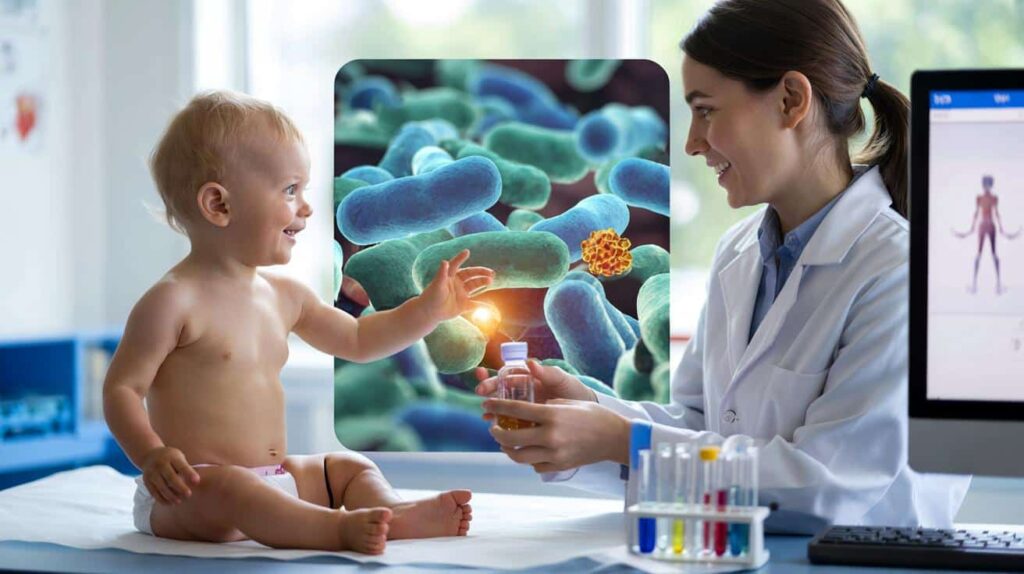
Allergies rising, but some children stay unaffected
Allergic disease has become almost routine in childhood. Eczema, asthma, food allergies and hay fever now affect a large share of kids in Europe and North America. French research body Inserm estimates that nearly one in three children lives with at least one allergic condition.
That trend has baffled doctors for years. Genes alone do not explain the surge, and environmental suspects like pollution, ultra-processed food or indoor lifestyles only cover part of the picture.

New work from Danish scientists now points directly to early gut bacteria and one particular molecule they produce as a powerful brake on allergy development.
The study, published in the journal Nature Microbiology, follows children from birth to age five. It links specific gut microbes, a small compound called 4-hydroxyphenyllactic acid (4‑OH‑PLA), and the way the immune system learns to stay calm instead of overreacting to harmless substances such as pollen or food proteins.
The key molecule that tones down allergy signals
The research group, led by Professor Susanne Brix Pedersen at DTU Bioengineering in Denmark, focused on how the infant gut microbiome shapes immunity in the earliest months of life.
They found that certain strains of bifidobacteria, common “friendly” bacteria in early life, produce 4‑OH‑PLA in the intestines of infants. This compound appears to directly influence allergy-related antibodies.
At concentrations typically found in the guts of healthy infants, 4‑OH‑PLA cut levels of IgE — the main allergy antibody — by about 60%, while leaving other protective antibodies untouched.
That detail matters. Many allergy drugs act later, once symptoms appear, and can blunt broader immune responses. Here, the system’s overall defence against infections stays intact, while the specific “allergy pathway” is dialled down before it spirals out of control.
In practical terms, a baby with enough of these 4‑OH‑PLA-producing bacteria may be less likely to develop sensitisation — that first quiet stage when the body starts making IgE to something like milk proteins, cat dander or tree pollen.
A long-term study from birth to five years
To verify the link, researchers tracked 147 children from birth until age five. They collected stool samples to map gut bacteria and the molecules they produced, and they repeatedly measured immune markers linked to allergies.
What the researchers followed
- Composition of the gut microbiota during the first months and years
- Levels of metabolites such as 4‑OH‑PLA in the gut
- Blood markers of immune activity, including IgE
- Clinical signs or tests showing allergic sensitisation
Children who had a high abundance of specific bifidobacteria during the first months of life were significantly less likely to become sensitised later on. Genetic analysis of the stool samples allowed the team to match particular bifidobacteria strains with the production of 4‑OH‑PLA and with more tolerant immune profiles.
The data link three pieces of the puzzle: which bacteria live in the baby’s gut, what they produce, and how the immune system behaves years later.
The work supports the idea that the first months of life represent a critical window during which the immune system is “trained” by microbes, setting the risk level for allergies long before symptoms like rashes or wheeze arrive.
Birth, feeding and early contact shape the gut microbiome
The team also examined which early-life factors encouraged colonisation by those helpful bifidobacteria. Several patterns stood out clearly in the Danish cohort.
Factors linked to protective bacteria
| Factor | Effect on bifidobacteria colonisation |
|---|---|
| Vaginal birth | Markedly higher odds of acquiring protective strains from the mother |
| Exclusive breastfeeding | Supports growth of infant-type bifidobacteria that use human milk sugars |
| Early contact with other children | Increases microbial exchange and diversity in the gut |
According to immunologist Rasmus Kaae Dehli, also at DTU, babies born vaginally had up to 14 times higher chances of receiving these specific bifidobacteria from their mothers compared with those born by caesarean section.
Exclusive breastfeeding during the first months further fed these microbes, as bifidobacteria are particularly good at consuming human milk oligosaccharides, the complex sugars found in breast milk. Early interactions with siblings or other children also appeared to boost microbial variety, which tends to support a more balanced immune response.

A potential new strategy to prevent allergies
The findings land at a time when these beneficial bacteria seem to be fading in many Western populations. Caesarean deliveries, shorter or absent breastfeeding, more sterile environments and widespread antibiotic use all play a role.
The Danish team argues that this loss does not have to be permanent. Their data suggest it might be possible to “restore” the missing function.
Targeted probiotics or infant formulas enriched with 4‑OH‑PLA-producing bifidobacteria — or with the metabolite itself — could one day lower allergy risk in babies identified as vulnerable.
Such interventions are not on supermarket shelves yet. But early clinical trials are already running in Denmark under the name Begin, aiming to test whether supplying specific bacteria or compounds in the first months can reduce later asthma and allergy diagnoses.
If future results back the current findings, paediatric allergy prevention might move closer to routine. Instead of waiting for eczema flare-ups or wheezing episodes, doctors could support gut colonisation and immune training from the very start of life.
What parents can and cannot do right now
The science is still evolving, and no single measure can “guarantee” an allergy-free child. Still, several practical steps align with this new research and with existing medical advice.
- Discuss mode of delivery with your care team, while keeping in mind that caesarean sections remain lifesaving when needed.
- Breastfeed if possible, even for a few weeks, as breast milk strongly shapes the infant microbiome.
- Allow normal, safe contact with siblings and other children to support microbial exchange.
- Use antibiotics only when prescribed and necessary, so the young microbiome is not heavily disrupted.
Parents should be cautious about picking random over-the-counter probiotics. Many products contain strains that have not been tested for allergy prevention and may not produce 4‑OH‑PLA at all. The approach highlighted by the Danish research is highly specific to certain infant-type bifidobacteria.
What is IgE and why does it matter?
For non-specialists, IgE can sound abstract. It is one of several antibody classes that the immune system produces. Unlike IgG, which helps fight infections, IgE is closely tied to allergies.
When someone is sensitised, their body makes IgE against something harmless, such as peanuts or pollen. These IgE molecules attach to immune cells. The next time the person meets that allergen, those cells release histamine and other chemicals. That process leads to itching, swelling, sneezing, wheeze or, in severe cases, anaphylaxis.
By reducing IgE formation without touching other antibodies, 4‑OH‑PLA nudges the immune system toward tolerance while keeping defences against real pathogens intact.
This targeted effect is what excites many allergy specialists. Therapies that only affect IgE pathways could offer a smoother safety profile than broad immune suppressants.
How this research could change allergy care
Allergy medicine has long focused on managing symptoms — using inhalers, antihistamines, creams or desensitisation therapies once problems are established. The Danish data support a more preventative mindset, starting even before birth.
Future care might combine several layers: parents informed about microbiome-friendly choices in pregnancy and infancy; paediatricians using risk scores based on family history and early gut profiles; and, for high-risk infants, precisely designed probiotics that supply bacteria proven to generate protective metabolites like 4‑OH‑PLA.
At the same time, public health services would still need to address environmental drivers such as indoor air quality, pollution and smoking, which remain strong triggers for asthma and other respiratory complaints.
For now, the message is nuanced: allergies are not purely genetic fate, nor simply bad luck. Tiny microbes in the first weeks of life, and the molecules they release, seem to help decide which children end up sneezing and wheezing — and which quietly escape.