As energy prices stay high and climate rules tighten, homeowners are hunting for insulation that doesn’t just trap heat, but also protects their wallet and the planet. One natural material, long grown in European fields, is starting to look like a serious rival to classic glass wool and polystyrene.
Why insulation is now a financial issue, not just a comfort upgrade
Insulation used to be a technical detail, buried in building plans and energy reports. That era is over. In many European countries and in the UK, a property’s energy performance certificate (EPC) now shapes its market value, its rental potential and even access to mortgages.
Good insulation means less heat lost through walls and roofs in winter and less overheating in summer. That translates directly into lower energy bills and a more stable indoor temperature throughout the year.

In many markets, two almost identical homes can see a 10–15% price gap purely based on energy performance.
Insulation also affects acoustic comfort. Thick external walls and well-insulated roofs soften traffic noise, neighbours’ music and even wind and rain. Buyers, especially in cities, increasingly ask about soundproofing during viewings.
Yet much of the existing housing stock still relies on traditional materials like glass wool and expanded polystyrene. They do the job thermally, but their environmental footprint and end‑of‑life issues are pushing architects and homeowners to look somewhere else.
Flax: the “old” crop behind a new type of insulation
One of the most promising contenders is insulation made from flax fibre. Flax is not some exotic plant: it has been grown for centuries in France, Belgium and the Netherlands, mainly for textiles and linseed oil.
The new twist comes from using the short fibres and by‑products that used to have little value. These are processed into panels, rolls or loose fill, forming a natural insulation with both thermal and acoustic performance.
Flax insulation combines renewable origin, low‑carbon production and solid technical performance in a single material.
How flax helps beat both cold and heat
Flax fibre traps air in its structure, acting as a thermal barrier. In winter, that slows heat escaping through walls and roofs. In summer, its density and heat storage capacity delay heat waves travelling through the building envelope, reducing the risk of stifling bedrooms under the roof.
On top of that, flax has strong acoustic properties. It damps vibrations and absorbs mid‑ and high‑frequency sounds, which helps in terraced houses, flats and homes near busy roads.
Humidity management: an underrated advantage
Unlike many synthetic products, flax insulation is “hygroscopic”: it can take up moisture from the air and release it again without losing its shape. That helps stabilise indoor humidity and limits condensation in walls and roofs when installed correctly.
By avoiding trapped moisture, the risk of mould, odours and hidden structural damage drops sharply. For households with asthma or allergies, this can make a noticeable difference to daily comfort.
Flax insulation is free from volatile organic compounds, which reduces indoor pollution often linked to synthetic building products.
From walls to roofs: where flax insulation fits
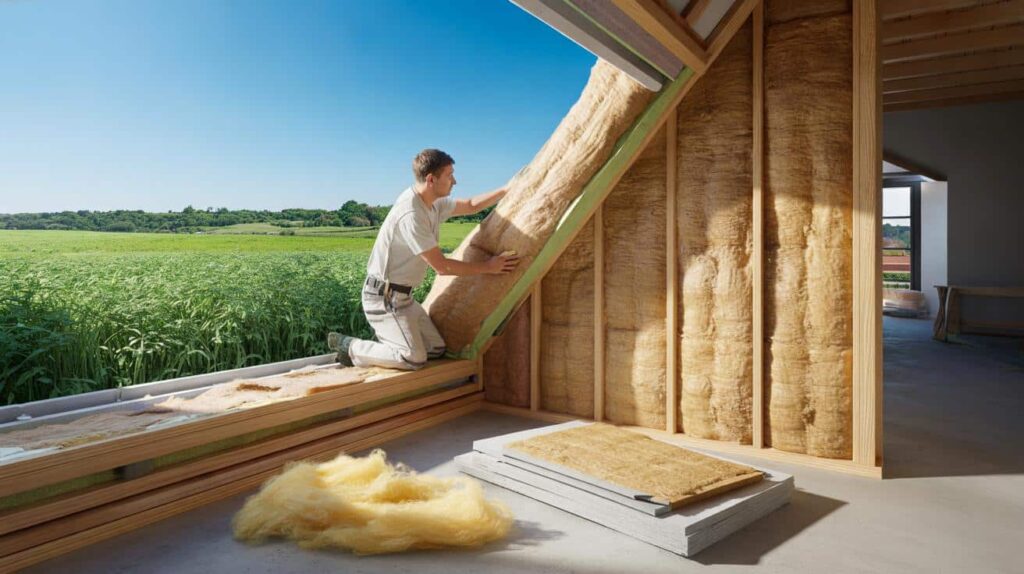
Manufacturers now offer flax insulation in several forms, making it adaptable to different projects:
- Flexible batts or rolls for timber stud walls and pitched roofs
- Rigid or semi‑rigid panels for internal wall linings and some external insulation systems
- Loose fill for attics, cavities and irregular spaces
For self‑builders and DIY renovators, one strong appeal is handling. Flax products are light, relatively dust‑free and more pleasant to cut and fit than itchy mineral wool.
Professional contractors also point to easier site management: fewer protective suits, fewer complaints about skin irritation and simpler waste sorting, since off‑cuts can often go into organic or dedicated recycling streams.
How it compares with classic insulation materials
On paper, mineral wool and polystyrene still look attractive: they are cheap, widely available and deliver good thermal resistance per centimetre. Yet this is only part of the picture. When you take carbon footprint, recyclability and comfort over the full life of the building into account, the ranking changes.

| Criterion | Flax insulation | Glass wool / polystyrene |
|---|---|---|
| Origin | Plant‑based, renewable | Mineral or petrochemical |
| Carbon footprint | Low; flax absorbs CO₂ while growing | Higher; energy‑intensive manufacturing |
| Recyclability | Recyclable, biodegradable where conditions allow | Complex, often landfilled or downcycled |
| Indoor air quality | No added VOCs; limited dust | Can emit VOCs; more dust and fibres |
| Price | Higher purchase cost | Generally cheaper |
The main obstacle remains price: natural insulation products, including flax, can cost 10–30% more than standard options. Yet the initial outlay is partly offset by better comfort, potential energy savings and a growing “green premium” on resale.
Why regulators and banks suddenly care about your insulation
France’s RE2020 rules, new building codes in several EU countries and tightening standards in the UK all push for lower‑carbon construction. That means not only cutting energy use during operation, but also reducing emissions tied to materials.
Flax has a strong card to play here. It stores carbon absorbed during plant growth and requires relatively little energy to process. For architects trying to pass strict life‑cycle assessments, swapping a synthetic insulation for a plant‑based one can tip a project into compliance.
Natural insulation materials are becoming a strategic tool to meet climate rules without sacrificing design freedom.
Financial actors are moving too. Green mortgages, better loan conditions for energy‑efficient renovations and local subsidies are increasingly linked to verifiable gains in performance. Homeowners able to show a jump in energy rating, helped by better insulation, can access these incentives more easily.
What this means for your home’s value
A buyer touring a property today often checks three things before falling for the kitchen: energy rating, expected bills and signs of damp or mould. Flax insulation touches all three.
Thermally, it can help lift a home out of the dreaded “energy sieve” category. That matters in countries where poorly rated homes face rental bans or mandatory renovation timelines. A better EPC band tends to shorten selling time and improve negotiating power.
Health‑wise, estate agents increasingly highlight “low‑VOC materials” and “natural insulation” as selling points, especially in family homes. It may not add a fixed number to the price, but it widens the pool of interested buyers and can position the property in a more attractive segment.
A simple scenario: the 1970s house
Imagine a 120 m² detached house from the 1970s, typical in many suburbs. Original insulation, thin loft layer, cold walls. The owner chooses to renovate the roof and internal wall linings using flax insulation instead of mineral wool.
The upfront cost is perhaps £1,500–£3,000 higher. Yet heating demand falls noticeably, summer overheating under the roof eases and the property’s energy rating moves up one or two bands. If energy prices remain elevated, the payback time can be around ten years, while the improved rating may add several thousand pounds to the resale price.
Points to check before switching from classic insulation
Flax insulation is not a silver bullet. Like any material, it performs well only if installed correctly and in the right context. Homeowners considering it should pay attention to:
- Moisture control: vapour barriers and airtight layers must be properly designed to avoid condensation in the structure.
- Fire regulations: flax products are treated to meet fire standards, but local rules and required classifications vary.
- Supply chain: not all areas have easy access to natural insulation; delivery times and stock can affect project planning.
- Compatibility: ensure that renders, membranes and fixings are suitable for bio‑based materials.
Working with an architect or energy consultant familiar with natural materials helps. They can run simulations on heat loss, summer comfort and payback time, comparing flax with more conventional options for your specific building.
Beyond insulation: a different way of thinking about materials
Once people start looking at what goes into their walls, they tend to ask fresh questions about flooring, paints and furniture. Flax insulation can be a first step toward a broader shift to low‑impact materials, from timber structures to clay plasters and plant‑based paints.
The combined effect is more than just “eco‑friendly” branding. Buildings using bio‑based materials often offer more stable humidity, fewer chemical emissions and a softer acoustic atmosphere. Those intangibles are hard to measure, but they influence how long people stay in a home and how they value it.
For landlords, there is also a strategic angle: investing in higher‑quality, natural insulation now may reduce the likelihood of future regulatory penalties, while making the property stand out on increasingly crowded rental platforms.
For owner‑occupiers planning to stay put, the calculation is different but just as concrete: better air, calmer rooms and reduced dependence on heating and air‑conditioning systems. Flax, once seen only as a crop in northern fields, is quietly becoming a tool for reshaping how our homes feel, perform and hold their value in a fast‑changing housing market.